India's Arms Revenue Grows as China's Defence Industry Declines


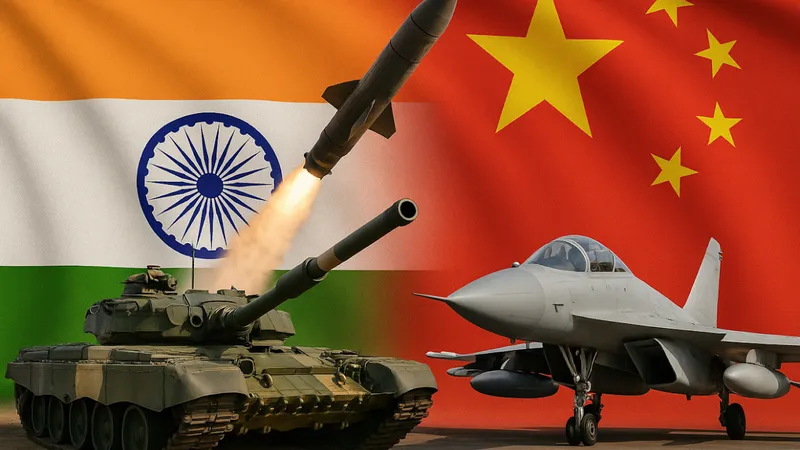
The latest report from the Stockholm International Peace Research Institute (SIPRI) reveals a notable shift in the global arms landscape for 2024. Global arms revenues reached a record $679 billion, marking a 5.9% increase in real terms compared to the previous year. While the United States and European countries contributed significantly to this growth, the Asia and Oceania region experienced a decline largely due to a substantial drop in revenues from Chinese arms companies.
Growing Arms Industry in India
India, though not yet a dominant player in the global arms market, recorded a steady increase in its arms revenues. The combined revenue of India's three firms listed in the SIPRI Top 100—Hindustan Aeronautics Limited (HAL), Bharat Electronics Limited (BEL), and Mazagon Dock Shipbuilders—rose by 8.2% to $7.5 billion in 2024, up from $6.9 billion in 2023. Bharat Electronics Limited showed remarkable growth, with a 24% increase in revenue to $2.47 billion, primarily driven by domestic orders for radar systems and electronic warfare equipment.
HAL, which ranks 44th globally, earned $3.81 billion, reflecting a slight decrease of 0.3% from the previous year due to delays in deliveries. Mazagon Dock, focused on naval shipbuilding, reported a 9.8% increase in revenue to $1.23 billion, benefiting from ongoing submarine and destroyer production.
This growth aligns with India’s ongoing “Atmanirbhar Bharat” or self-reliant India initiative, aimed at increasing domestic production in the defence sector. According to the SIPRI report, the incremental gains in India's defence production signify the emergence of a robust industrial base that could eventually challenge traditional arms suppliers.
Declining Chinese Arms Industry
In stark contrast, China’s position in the arms market has weakened significantly. The combined revenues of its eight arms producers in the SIPRI Top 100 fell by 10% to $88.3 billion. This decline is attributed to a series of high-profile corruption scandals and leadership changes that have destabilised its defence sector. Notably, NORINCO, a leading land systems manufacturer, reported a staggering 31% drop in revenue, while the China Aerospace Science and Technology Corporation (CASC) saw a 16% decrease due to delays in military satellite programmes and the ousting of its president amid graft allegations.
The challenges facing China's defence industry were highlighted by Nan Tian, director of SIPRI's military expenditure and arms production programme, who stated, "A host of corruption allegations in Chinese arms procurement led to major arms contracts being postponed or cancelled in 2024." The political purges related to President Xi Jinping's anti-corruption campaign have disrupted procurement processes and created instability within several key defence firms.
Changing Dynamics in Asia
While China’s decline negatively impacted the overall arms revenues in Asia, other regional powers have capitalised on the situation. South Korea's arms production surged by 31% to $14.1 billion, driven by a significant rise in exports. Meanwhile, Japan exhibited the most substantial growth in the region, with a 40% increase in arms revenues across five firms, reaching $13.3 billion. This increase reflects Japan's shift towards proactive defence spending amid escalating regional tensions.
Global Context and Future Outlook
The global arms race shows no signs of slowing down, with United States firms remaining central to the industry. In 2024, the 39 American companies in the Top 100 generated $334 billion in arms revenues, accounting for nearly half of global sales. However, many American defence projects are facing delays and budget overruns, raising concerns about the capacity to deliver timely military capabilities.
European arms producers also saw a significant uptick, with revenues rising by 13% to $151 billion, largely due to increased military spending in response to the ongoing conflict in Ukraine.
For India, continued growth in domestic defence procurement and manufacturing is expected under the Defence Acquisition Procedure (DAP). India is likely to expand its arms exports, particularly targeting markets in Africa and Southeast Asia, although it still faces challenges in competing with established players like South Korea and Israel.
China, while still a major player, will need to address the integrity of its procurement processes and manage internal political challenges to regain momentum in its arms production. The evolving dynamics in Asian defence highlight that while India is gradually climbing the ranks, China's recent setbacks illustrate the precarious nature of relying on a top-down, state-controlled defence sector.
Conclusion
As the arms race in Asia continues to develop, the balance of power appears to be shifting. India's steady, institutionally driven growth contrasts sharply with the internal turmoil affecting China's defence sector. This evolving landscape suggests that discipline and governance may become increasingly critical in determining future success in arms production across the region.
Kerala Initiates Probe into 2006 Suicide Case Involving CEC

Extradition of Sheikh Hasina Feasible, Says Indian High Commissioner

Punjabi Makeup Artist Mad Sandhu Shot Dead in Amritsar

India Achieves Fourth Place at Asian Games 2026 Through Late Success