India's Agriculture Sector Grows Over 4% Annually for First Time


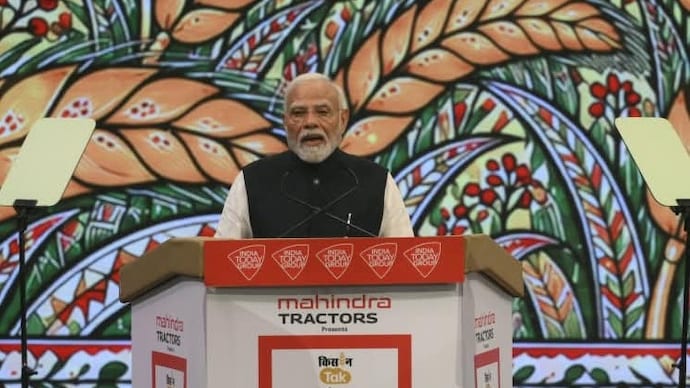
Prime Minister Narendra Modi announced that India’s agriculture sector experienced an annual growth of more than 4 per cent over the last decade, a notable achievement since the country gained independence. Speaking at the Kisan Tak Bharat Agriculture Conference in New Delhi, Modi highlighted that approximately 50 crore people have risen out of poverty in the past 12 to 13 years, citing a report by the World Bank on the relationship between agricultural growth and poverty alleviation.
Modi pointed out that poverty has decreased most rapidly in rural regions, with many small-scale farmers successfully lifting themselves out of economic hardship. He emphasised the essential role of agriculture in India's aspiration to evolve into a developed nation and called for strategies to make farming more efficient and farmers economically independent.
Critiquing past administrations, Modi stated that while previous governments prioritised food grain stockpiling, they neglected to adapt to changing market conditions, technological advancements, and shifting food preferences. "Filling grain stores is not enough," he asserted, stressing the necessity for equipping farmers with modern skills and diversifying agricultural practices.
The Prime Minister also underscored the government's financial commitment to farmers, noting that a total of ₹16 lakh crore has been allocated for fertiliser subsidies within the past 12 years. Despite the pressures from international markets, he reported that a 50-kilogram bag of di-ammonium phosphate (DAP), normally priced at approximately ₹5,000 globally, is sold to Indian farmers for just ₹1,300.
Modi addressed the context of rising global crude oil prices due to ongoing conflicts in West Asia, revealing that the government absorbed ₹43 of a potential ₹50 increase in diesel prices. He stated, "India had to raise diesel prices by at least ₹50. However, we decided that the burden of international market shocks would not entirely fall on our citizens and farmers."
In his remarks, Modi asserted that diesel prices in India only increased by ₹7 per litre, with the government covering the remaining costs. He noted that this measure has resulted in a significant financial obligation for the government, amounting to ₹14,000 crore each month, aimed at shielding consumers and farmers from fluctuating fuel prices.
Highlighting the nation’s agricultural productivity, Modi indicated that India exports agricultural goods worth over ₹4 lakh crore annually. He affirmed that India holds the title of the world's largest producer of various commodities, including milk, pulses, jute, rice, wheat, cotton, fruits and vegetables, fish and millets. Milk production alone has surged by 70 per cent in the last decade, with egg production up by 90 per cent and fish production more than doubling.
To further promote agricultural diversity, Modi encouraged farmers to explore alternatives to traditional crops like wheat, rice, and sugarcane for additional income sources. He pointed out the government's distribution of around 12 lakh solar pumps under the PM-KUSUM initiative, which has aided in reducing electricity costs and enabling supplementary income opportunities for farmers.
The Prime Minister also mentioned that the number of soil testing laboratories has grown to over 8,400 since 2014, and the establishment of more than 7,500 Krishi Vigyan Kendras has provided crucial support to farmers. Modi called for a shift towards agricultural entrepreneurship, noting the creation of 10,000 Farmer Producer Organisations (FPOs) to facilitate farmers' access to food processing technologies.
Encouraging environmentally friendly practices, Modi urged a reduction in chemical fertilisers and pesticides, warning that their excessive usage compromises soil health. He proposed natural farming as a feasible alternative, illustrating that one cow could produce sufficient manure for cultivation across 30 acres, and thus advocating for the broader implementation of natural farming methods.
In closing, Modi called upon agricultural equipment manufacturers and start-ups to focus on developing solar-powered machinery, which he described as crucial in realising the vision of a developed India.
Addressing Stubble Burning in India: Seeking Sustainable Solutions
Sam Pitroda Praises Narendra Modi Amid Political Tensions

Pimpri Chinchwad Declared Cleanest City in Maharashtra: Activists React
Priyanka Gandhi Challenges BJP Over Sonia Gandhi's Memoir Claims