Google Collaborates with UK Researchers to Explore Quantum Technology


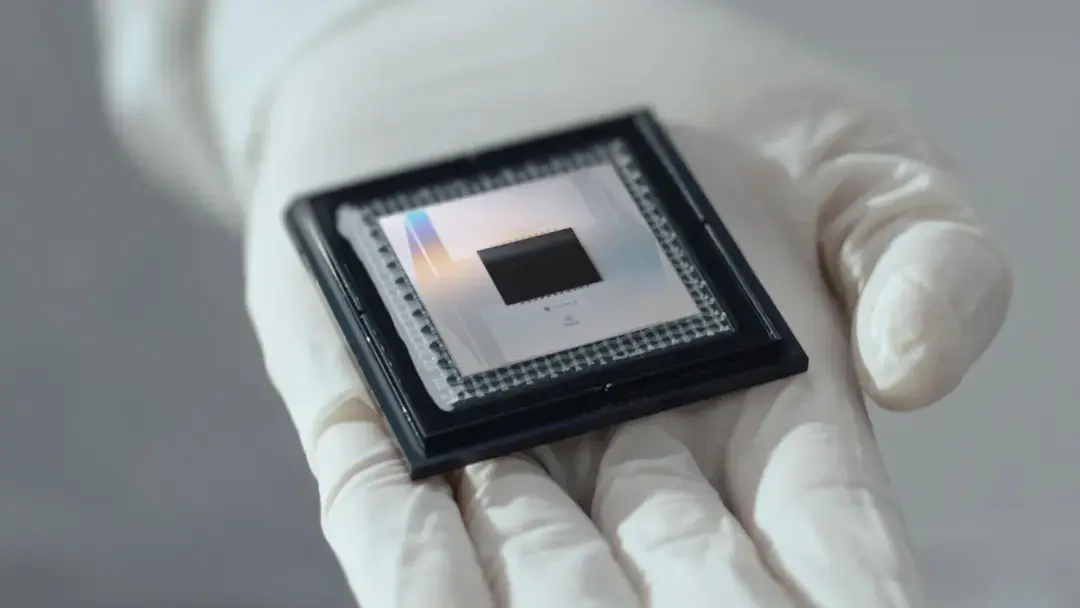
Google has initiated a collaboration with the United Kingdom to engage researchers in exploring practical applications for its advanced quantum chip, known as Willow. This initiative forms part of a broader effort by various companies to develop powerful quantum computing capabilities, which are increasingly viewed as pivotal for the future of technology.
The collaboration aims to enable researchers to tackle complex challenges in disciplines such as chemistry and medicine, which current classical computers struggle to address. Professor Paul Stevenson from the University of Surrey, who is not directly involved in the partnership, remarked on the significance of this development, stating that it represents a positive opportunity for UK researchers.
Accessing Google's Willow processor through this competitive initiative is expected to place UK researchers in a leading position within the global quantum landscape. Professor Stevenson noted, "The new ability to access Google's Willow processor, through open competition, puts UK researchers in an enviable position. It is good news for Google, too, who will benefit from the skills of UK academics."
Quantum computing operates on principles that differ fundamentally from traditional computing technologies that power everyday devices like smartphones and personal computers. These quantum devices leverage the principles of particle physics to solve problems that were previously considered insurmountable.
Despite the potential of quantum technology, its full capabilities remain largely untapped, and existing quantum computers are primarily experimental with limited real-world applications. The collaboration aims to bridge this gap by providing UK researchers with opportunities to innovate and discover new, practical uses for the Willow chip.
Researchers will be invited to submit proposals detailing their intended applications of the quantum chip. They will collaborate with experts from Google and the UK’s national quantum computing laboratory to design and conduct experiments that could lead to groundbreaking advancements.
Since its introduction in 2024, the Willow chip has been viewed as a significant milestone in quantum technology. Competitors such as Amazon and IBM are also making strides in this field, contributing to a rapidly evolving technological landscape.
The UK has established itself as a vital player in the global quantum industry. For instance, Quantinuum, a company with operations in Cambridge and Colorado, achieved a valuation of $10 billion (£7.45 billion) in September. Recent announcements regarding advancements in quantum technology have led some experts to predict that machines capable of significant real-world impact could emerge within the next decade.
Dr Michael Cuthbert, the Director of the National Quantum Computing Centre (NQCC), emphasised that this partnership would expedite breakthroughs in scientific research. He stated that the cutting-edge science supported by this collaboration could ultimately facilitate the application of quantum computing in critical areas, including life sciences, materials science, chemistry, and fundamental physics.
The NQCC is currently home to seven quantum computers operated by British firms such as Quantum Motion, ORCA, and Oxford Ionics. The UK government has pledged £670 million to bolster quantum technology, recognising it as a priority within its Industrial Strategy. Officials anticipate that quantum technology could contribute up to £11 billion to the UK economy by 2045.

Canada and India Accelerate Trade Talks Ahead of December Visit

US President Donald Trump Addresses UN General Assembly in 2026

Richa Chadha Commends Salman Khan's Stand Against Body-Shaming

Delhi University Students Express Concerns Over Safety After Assault