Trump Push on Venezuela Oil Faces China’s Rapid Clean Energy Shift


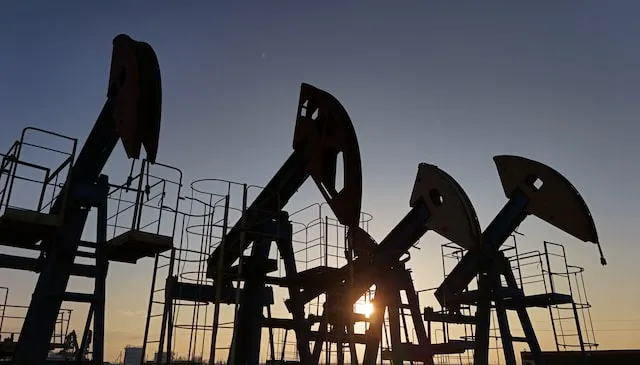
The Trump administration has outlined plans to market and sell Venezuelan oil indefinitely, holding the proceeds in United States accounts, in what officials describe as an effort to revive production in the crisis-hit South American nation and stabilise its economy. However, energy experts say the long-term outlook for Venezuelan oil demand is uncertain, particularly because China, the world’s largest oil importer, is moving away from fossil fuels at remarkable speed.
Speaking at a Goldman Sachs conference in Miami, United States Energy Secretary Chris Wright said Washington would begin by selling crude currently held in storage in Venezuela, before extending the sales to future production. “We’re going to market the crude coming out of Venezuela – first this backed-up stored oil and then indefinitely going forward,” he said. President Donald Trump has said Venezuela could relinquish up to 50 million barrels of oil, valued at about 2.8 billion dollars, for the United States to sell.
The policy follows the removal of former Venezuelan president Nicolás Maduro and a partial rollback of US sanctions on the country’s oil sector. The administration is also urging American energy companies, including Chevron, ConocoPhillips and Exxon Mobil, to help rebuild Venezuela’s ageing oil infrastructure and increase production, which has fallen to below one million barrels per day after years of underinvestment and corruption.
China’s changing role in Venezuelan oil
For more than a decade, China has been one of Venezuela’s most important oil customers, importing an estimated 400,000 to 500,000 barrels per day, according to Janiv Shah, vice president of commodity market research at Norwegian energy firm Rystad. Even so, Venezuela accounts for only a small share of China’s total oil imports.
China’s foreign ministry has defended the relationship, calling its energy cooperation with Venezuela “legitimate and in line with the interests of both sides”, and stressing that it should not be subject to interference from third parties.
Despite this, analysts say China’s reliance on Venezuelan oil is diminishing. China has either reached or is approaching what experts describe as “peak oil”, the point at which national oil demand stops growing and begins to decline. The shift is being driven primarily by the rapid electrification of the country’s transport sector.
China’s electric vehicle transformation
China now dominates the global electric vehicle market. Of the 18.5 million electric vehicles sold worldwide last year, more than 11 million were sold in China, according to the British research firm Rho Motion. Electric vehicles have become firmly established in China, supported by consistent government policy, large-scale manufacturing and extensive charging infrastructure.
“This is very decisive; it’s not going to go back,” said Li Shuo, director of the China Climate Hub at the Asia Society Policy Institute. He contrasted China’s approach with what he described as the more inconsistent rollout of electric vehicle policy in the United States.
As China’s domestic market becomes increasingly saturated, manufacturers are turning outward. Chinese carmaker BYD, which recently overtook Tesla as the world’s largest electric vehicle seller, exported record numbers of vehicles last year. Analysts say Chinese electric vehicles are gaining ground particularly in developing economies, reshaping transport systems beyond China’s borders. Implications for global oil markets
China’s reduced appetite for oil has global consequences. As the world’s largest oil importer, even modest changes in its demand can affect prices and trade flows. While oil use in China’s transport sector has already peaked, demand from petrochemicals and aviation is still expected to rise, partially offsetting the decline.
Shah said that US intervention in Venezuela could cause Chinese imports from the country to fall sharply in the short term, describing it as “a symbolic strike against China on the world scale”.
However, he added that China would still be able to secure oil from other sanctioned suppliers, such as Russia and Iran, often at discounted prices.
“In other words, Venezuela needs China’s business more than China needs Venezuela,” Li Shuo said, noting that Beijing has multiple alternative sources of supply.
US strategy and energy divergence
The Trump administration argues that controlling and selling Venezuelan oil will benefit both countries, with revenues held in US Treasury accounts and later channelled back into Venezuela. White House Press Secretary Karoline Leavitt said the funds would serve the interests of both the American and Venezuelan people.
Critics, however, say the strategy highlights a widening divide between the energy paths of the United States and China. While China is expanding renewable energy at an unprecedented pace, the United States is increasing oil production at home and seeking new supplies abroad.
China is currently building more than 500 gigawatts of new solar and wind capacity, adding to around 1,400 gigawatts already in operation, according to Global Energy Monitor. Beijing has pledged to raise total wind and solar capacity to 3,600 gigawatts by the end of the decade. It is also expanding nuclear power and investing in experimental fusion energy.
Context
Analysts say the US move in Venezuela may ultimately reinforce China’s long-term push for energy independence. By reducing reliance on imported oil, particularly from politically unstable regions, China aims to insulate its economy from geopolitical shocks.
“The largest economy in the world is embracing a petrostate approach,” Li Shuo said of the United States. “It reinforces the notion that the US is moving backwards on the energy transition, while China is racing ahead toward the energy systems of the future.”
As global oil prices hover around 60 dollars a barrel, the long-term viability of Venezuela’s oil revival remains uncertain. What is clear, experts say, is that the future of global energy demand will increasingly be shaped not by new oil fields, but by how quickly major economies move away from fossil fuels.
Kerala Initiates Probe into 2006 Suicide Case Involving CEC

Extradition of Sheikh Hasina Feasible, Says Indian High Commissioner

Punjabi Makeup Artist Mad Sandhu Shot Dead in Amritsar

India Achieves Fourth Place at Asian Games 2026 Through Late Success