European NATO Forces Mobilise in Greenland Amid Security Concerns


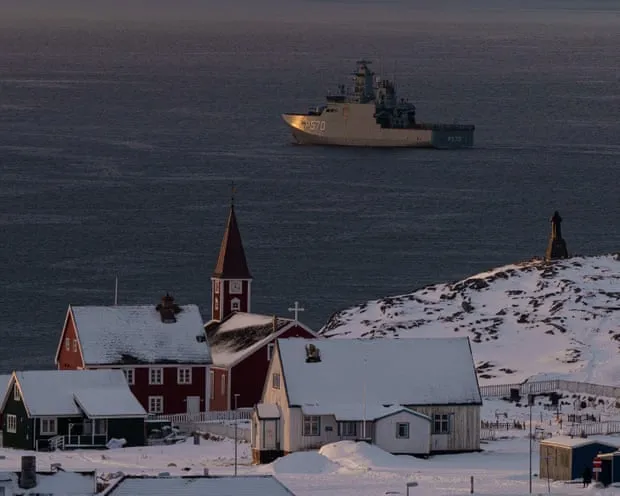
European NATO ally troops have begun arriving in Greenland for joint military exercises amid rising geopolitical tensions in the Arctic region. This deployment marks a significant event in European defence collaboration, highlighting the strategic importance of Greenland in maintaining security within the North Atlantic.
Denmark, which administers Greenland, has welcomed the influx of troops, with Prime Minister Mette Frederiksen stating that the defence of the island represents a shared responsibility among NATO members. The Prime Minister indicated that the presence of multinational forces is crucial to ensuring stability and deterring potential threats in this remote part of the world.
As global interest in the Arctic grows due to climate change and the potential for resource exploitation, security concerns are increasingly at the forefront of international dialogues. The exercises, which include British troops alongside forces from other European nations, are designed to enhance readiness and cooperation among NATO allies, emphasising collective defence principles.
The historical context of NATO's involvement in Greenland can be traced back to defence arrangements made during the Cold War, and the current exercises underscore the ongoing relevance of these agreements. Experts suggest that the enhanced military presence is also a response to increased activities by non-NATO nations in the Arctic, particularly as warmer temperatures allow for greater access to previously unreachable areas.
In an official statement, NATO Secretary-General Jens Stoltenberg remarked, "The security of Greenland is vital for the stability of the North Atlantic region. Our collective efforts here reflect our commitment to maintaining peace and security in an environment that is becoming more challenging."
The manoeuvres in Greenland come at a time of increased political discourse regarding the region. Notably, former United States President Donald Trump expressed a desire to purchase Greenland during his tenure, a notion that sparked widespread debate and concern among both local and international stakeholders. Although those discussions have since subsided, the geopolitical ramifications remain pertinent as national interests in the Arctic continue to evolve.
This training operation not only aims to foster interoperability between NATO forces but also serves as a clear signal of unity among Allied nations in the face of emerging threats in the Arctic. With the eyes of the world on Greenland, the outcome of these exercises could set the tone for future collaborative efforts in the region.
The presence of European troops is expected to bolster not only military capabilities but also local economies, providing a boost to communities in Greenland that will be hosting the personnel. The exercises will extend over several weeks, and continuous updates are anticipated as the situation unfolds.
Analysts believe that ongoing cooperation amongst NATO allies in Greenland will be crucial in addressing the myriad challenges posed by climate change and territorial claims in the region, framing Greenland as a crucial player in the broader geopolitical landscape.
Kerala Initiates Probe into 2006 Suicide Case Involving CEC

Extradition of Sheikh Hasina Feasible, Says Indian High Commissioner

Punjabi Makeup Artist Mad Sandhu Shot Dead in Amritsar

India Achieves Fourth Place at Asian Games 2026 Through Late Success