Escalating Conflict in Eastern Yemen Amid Saudi Air Strikes


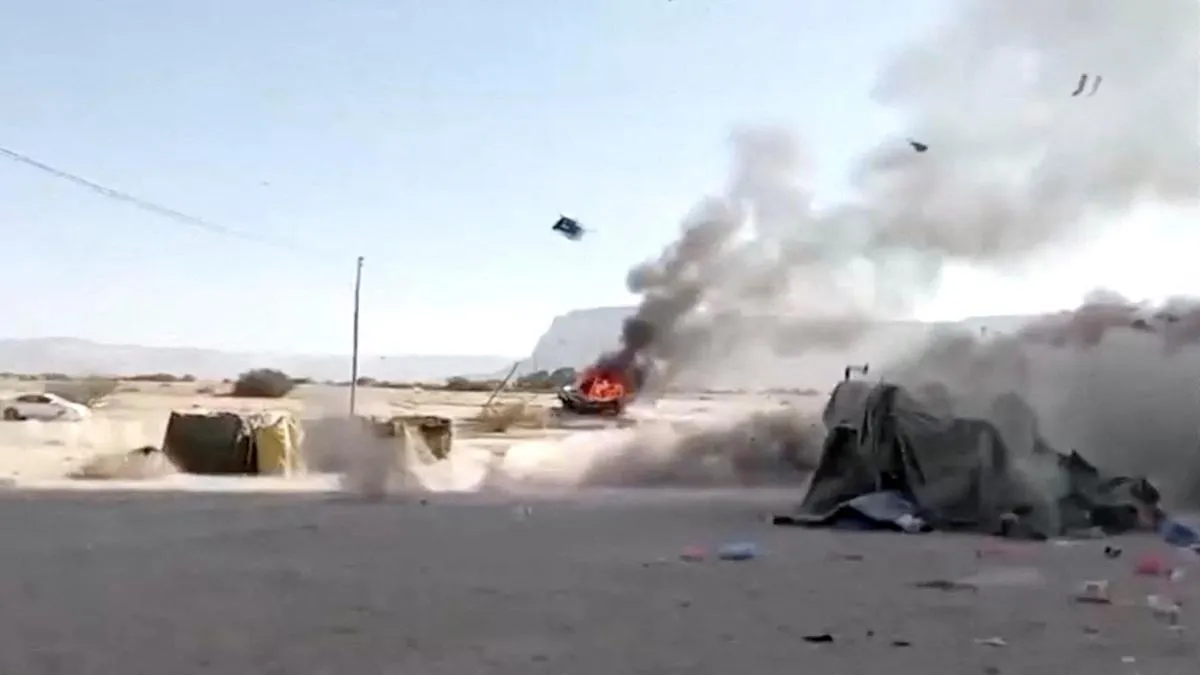
Fighting has intensified in eastern Yemen as Saudi Arabia conducts air strikes targeting the Southern Transitional Council (STC), a separatist group seeking independence. Reports indicate that at least 20 STC fighters have lost their lives in recent air raids on military installations in Hadramout province, according to the Agence France-Presse news agency, which cited military officials and medical sources.
The STC, which has been vocal in its quest for a breakaway state, claimed that seven air strikes struck the al-Khashaa military camp, the largest facility in the governorate. Additional strikes were reported at the Seiyun base, exacerbating the already volatile situation in the region.
A resident of a nearby village, Reyad Khames, described the atmosphere, stating, "We just see flashes and explosions hitting checkpoints, clearing the way for the Saudi-backed forces to advance." This development marks a significant escalation in the ongoing conflict that has plagued Yemen for over a decade.
The situation has drawn the attention of international observers, particularly analysts in the United States. Kenneth Katzman, a senior fellow at the Soufan Center, remarked on the US government's likely concern over the fighting, stating, "The United States never wants its allies to fight with each other." He noted that US President Donald Trump may be cautious in his response to avoid provoking either Saudi Arabia or the United Arab Emirates, as both nations have divergent interests in Yemen.
The STC has issued a strong condemnation of what it describes as Saudi aggression against the people of South Arabia. Their statement argues that the ongoing military actions constitute a violation of international humanitarian law and endanger civilians. They claim that the conflict has resulted in civilian casualties, significant infrastructure damage in Hadramout, and has provided opportunities for extremist groups to exploit the chaos.
In a recent declaration, the STC proclaimed the establishment of an independent state of South Arabia, asserting sovereignty over territories corresponding to the former Democratic Republic of Yemen. This announcement has raised questions regarding the future political landscape of Yemen. The STC plans to enter a two-year transitional phase, during which it aims to hold a referendum on independence.
Hisham Maqdashi, Yemen’s former deputy defence attache in Washington, expressed skepticism about the viability of a two-state solution, stating, "I think … this two-state idea has been demolished since 2015 when the Houthis went to Aden." He emphasised the need for dialogue to determine Yemen's future and state structure.
The ongoing clashes have highlighted the fractures within the coalition opposing the Houthi group, which is backed by Iran and controls much of northern Yemen. The recent separatist advances have further complicated the dynamics, revealing tensions between Saudi Arabia and the United Arab Emirates. Last week, the UAE announced its withdrawal of remaining forces from Yemen following Saudi Arabia's call for a rapid troop exit, marking a public disagreement between the two Gulf states.
Military spokesperson for the STC, Mohamed al-Naqib, reported fierce fighting in Hadramout, claiming that Saudi aircraft have targeted civilian areas, including schools and residential neighbourhoods, causing casualties. He denied allegations that the “Homeland Shield” forces had captured any territory in the region.
As the conflict unfolds, Yemen remains divided between the Iran-aligned Houthi forces in the north and the Saudi and Emirati-backed factions in the south, with the STC now asserting its claim for independence amidst increasing hostilities.
Kerala Initiates Probe into 2006 Suicide Case Involving CEC
Extradition of Sheikh Hasina Feasible, Says Indian High Commissioner

Punjabi Makeup Artist Mad Sandhu Shot Dead in Amritsar

India Achieves Fourth Place at Asian Games 2026 Through Late Success