Delhi Suicide Bomber's Video Reveals Radicalisation Insights


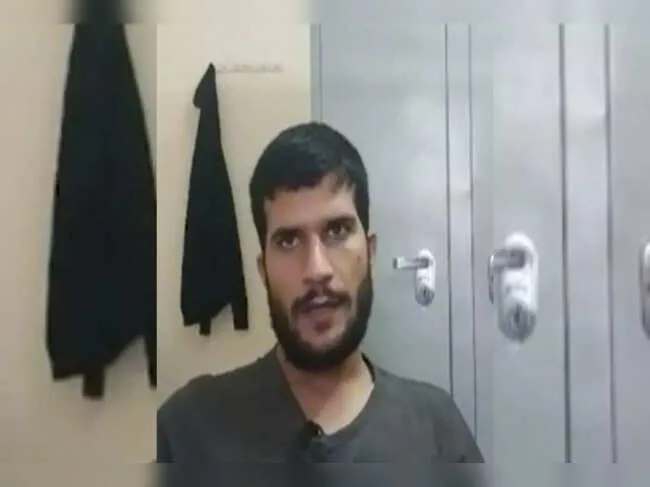
NEW DELHI: A video recorded by Umar Un Nabi, the individual responsible for the recent suicide bombing near the Red Fort in Delhi, has emerged as a significant piece of evidence in understanding his motivations and radicalisation. The video was discovered on a mobile phone that Umar left at his family home in Pulwama, Jammu and Kashmir, just days before the November 10 attack.
The device was initially hidden by his younger brother, who attempted to dispose of it due to fears of legal repercussions. However, he later disclosed its location to the authorities, leading to its recovery. The footage has been described as chilling, as it features Umar attempting to rationalise his actions and frame them within an ideological context.
Content of the Video
In the video, Umar speaks in English with a discernible accent, discussing what he refers to as 'martyrdom operations', a term he uses to describe suicide attacks. He claims that suicide bombing is often misunderstood and insists that such actions are justified under certain interpretations of Islam. He explains that a fidayeen, or martyr, believes he will die at a specific time and place, which he argues legitimises the act of self-sacrifice.
"One of the most misunderstood concepts is the concept of suicide bombing," he states, attempting to portray his intentions as noble. According to intelligence officials, the video serves as a recruitment tool aimed at persuading others within his network and appealing to impressionable youths.
Investigators' Insights
Officials believe that the video reflects a deep-seated ideological commitment and a desire to indoctrinate others. An intelligence officer remarked, "It shows he was not only prepared for a fidayeen attack, but wanted to justify it to others."
Psychologists have suggested that Umar exhibits signs of psychological conditioning. Dr Rajiv Mehta, a psychiatrist, noted that his body language indicates a strong conviction in his beliefs. "He appears brainwashed and believes he will be praised for what he is doing," Dr Mehta added.
Broader Implications
The investigation into the Red Fort blast has revealed that Umar was a key figure within a so-called 'white-collar' terror module, comprising individuals with professional backgrounds. The explosion resulted in at least ten fatalities and numerous injuries, marking a significant attack in Delhi's recent history.
This incident has raised concerns regarding the radicalisation of educated individuals, particularly through the use of social media and online platforms. Following the video's circulation, Meta, the parent company of Facebook, removed the footage from its platforms, citing violations of community guidelines regarding violent content.
Investigators have identified Umar as a highly radicalised individual who frequently discussed the justification of suicide attacks with his peers. The inquiry continues as authorities aim to dismantle the network associated with this attack.
The emergence of this video not only sheds light on the motivations behind the attack but also highlights the challenges faced by law enforcement and mental health professionals in addressing radicalisation among youths in the region.
Kerala Initiates Probe into 2006 Suicide Case Involving CEC

Extradition of Sheikh Hasina Feasible, Says Indian High Commissioner

Punjabi Makeup Artist Mad Sandhu Shot Dead in Amritsar

India Achieves Fourth Place at Asian Games 2026 Through Late Success