Congress to Protest MGNREGA Changes from January 10 Amid Criticism


The Indian National Congress has declared a series of nationwide protests starting January 10, 2026, in response to the government's recent changes to the Mahatma Gandhi National Rural Employment Guarantee Act (MGNREGA). The protests, termed 'MGNREGA Bachao Sangram', aim to restore the rural job guarantee scheme to its original UPA-era form. Congress leaders have accused the administration of Prime Minister Narendra Modi of steering the country towards what they term 'Vinash Bharat' or 'Ruined India' rather than 'Viksit Bharat', meaning 'Developed India'.
Congress President Mallikarjun Kharge stated that the party's demands include the withdrawal of the newly introduced Viksit Bharat—Guarantee for Rozgar and Ajeevika Mission (Gramin) Act (VB-G RAM G) and the restoration of the original MGNREGA framework. He emphasised that undermining MGNREGA equates to an attack on millions of workers and their constitutional rights. “We will resist, peacefully and firmly, from every Panchayat to Parliament,” Kharge remarked on social media platform X.
K.C. Venugopal, Congress General Secretary, also expressed concerns that the Modi government's intentions appear to be aimed at diminishing MGNREGA's impact, labelling the alterations as an attempt to convert a constitutional promise into a mere government programme. He argued that the changes have transformed the scheme from a demand-driven initiative to a supply-driven model, thus centralising control and diminishing the role of local governance bodies.
In a press briefing, Venugopal outlined the protest's structure, which includes district-level press conferences, public fasts at significant local sites, and grassroots meetings to mobilise support. The first phase commences on January 10 and will last until February 25, during which Congress aims to galvanise public opinion against the new law.
The protests will culminate on January 30, the anniversary of Mahatma Gandhi's martyrdom, with sit-ins at various local levels. The second phase of the demonstrations will involve significant public engagement activities, such as letter distributions to MGNREGA workers and local leaders, before moving into a third phase of district-level demonstrations and rallies across the country.
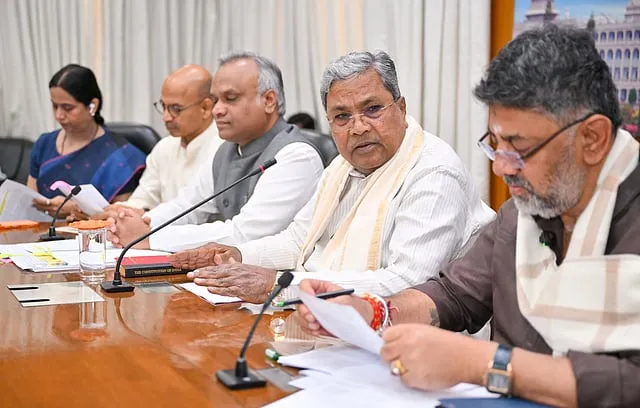
In Karnataka, Chief Minister Siddaramaiah has echoed similar sentiments, condemning the repeal of MGNREGA and criticising the new legislation for stripping rural workers of their rights. He stated that the Congress party will coordinate a national action plan to address these changes and will engage with other like-minded political parties.
Siddaramaiah stressed that the new VB-G RAM G Act imposes a financial burden on the states, requiring them to fund 40% of the scheme's costs, which he argues could lead to increased unemployment and hardship for vulnerable populations. He pointed out that the original MGNREGA scheme had provided vital employment opportunities to over 12 crore workers, with significant female participation.
“Just as farmers rallied to repeal the previous farm laws, we will also mobilise until the VB-G RAM G Act is rescinded,” Siddaramaiah declared, highlighting the urgency of the situation and the need for collective action among opposition parties. He also referred to past instances where the BJP had opposed MGNREGA, questioning the party's current stance on rural welfare.
The Congress party is evidently poised to leverage this issue as a rallying point for broader political discourse on rural employment and governance, as they aim to reclaim the narrative surrounding worker rights and local autonomy in the face of centralising policies. The coming weeks are expected to be significant in shaping public opinion on these critical issues in India.
Kerala Initiates Probe into 2006 Suicide Case Involving CEC

Extradition of Sheikh Hasina Feasible, Says Indian High Commissioner

Punjabi Makeup Artist Mad Sandhu Shot Dead in Amritsar

India Achieves Fourth Place at Asian Games 2026 Through Late Success