China's Economic Growth Boosted by AI Export Surge Amid Weakness


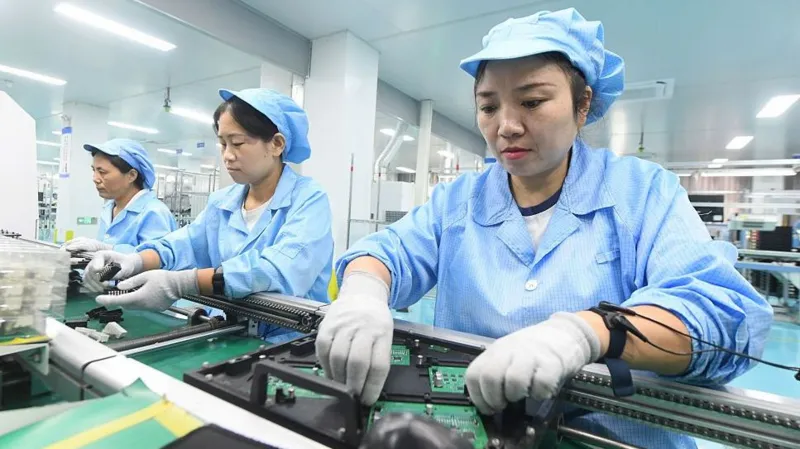
China's economic growth accelerated during the third quarter of the year, rebounding from its lowest rate in three years, in part due to an upsurge in exports linked to the artificial intelligence (AI) sector. According to data released by the National Bureau of Statistics of China, the country experienced a growth rate of 4.5% in the three months leading to September, marking an improvement from previous quarters but still trailing the 5% growth recorded in the first quarter of the year.
The recent growth figure falls within the lower range of China's annual target, which is set between 4.5% and 5%. Analysts suggest that this allows policymakers some flexibility to tackle ongoing economic difficulties. Although export numbers provided a boost, domestic consumption has weakened significantly. Global trade tensions and uncertainties surrounding AI investments have further complicated the economic landscape.
The National Bureau of Statistics noted that the economy showed "momentum through new growth drivers and improvements in structure", highlighting the ongoing adjustments taking place in various sectors. Exports have been bolstered, with a trade surplus projected to potentially surpass last year's record of $1.2 trillion (£900 billion). High-tech exports, particularly in sectors like batteries and industrial robotics, have seen an increase of 14.3%, with production in these domains exceeding 29% growth.
Sheana Yue, a researcher from Oxford Economics, observed that while manufacturing and high-tech exports fuel China's economic rehabilitation, weak investment levels and subdued domestic spending remain significant challenges. Property investment specifically experienced a decline of over 20% in the first nine months compared to the same period last year, fuelling concerns regarding a lingering property slump driven by previous overbuilding and excessive borrowing by private developers.
Yue indicated that this trend shows little sign of reversal in the near future. Additionally, trade uncertainties and geopolitical tensions have fostered a sense of pessimism among Chinese consumers, leading to reduced spending. Dave Chia, an economist at Moody's Analytics, remarked that while the targeted support measures introduced by Beijing have yet to yield clear results, the economy's reliance on exports could pose risks ahead.
The technology sector has emerged as a crucial growth driver in recent quarters. Global demand for computer chips and components used in AI data centres has helped to alleviate some pressure on the Chinese economy, mitigating the effects of sluggish consumption patterns domestically. Many Chinese businesses have increasingly depended on export markets due to a combination of a prolonged property slump, limited wage growth, and high youth unemployment rates affecting local consumer habits.
In September, measures were announced by the Chinese government, including reductions in interest rates for specific businesses and subsidies aimed at property buyers, designed to stimulate the economy. However, the government is also facing pushback from Western economies, including the United States and the European Union, as manufacturers struggle against a flood of inexpensive Chinese goods.
Concerns persist regarding the extensive investments being made in AI infrastructure and the capability of companies to deliver on their anticipated profitability. Furthermore, trading standards officers have indicated that AI advancements are contributing to a rise in scams through the creation of fake websites and cloned services, complicating the economic landscape even further.
As China navigates these complexities, the challenge remains to balance export-led growth with revitalisation of domestic consumption, making the coming months pivotal for the country's economic future.

Tragic Truck Accident Claims 15 Lives Near Gwalior Temple

Manipur Violence: One Dead, 15 Homes Set Ablaze in Kamjong

Chemical Tanker Fire Disrupts Traffic on NICE Road in Bengaluru
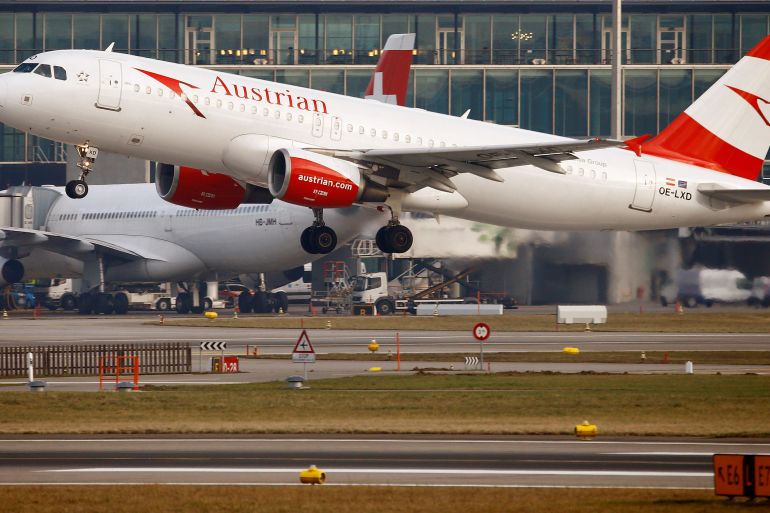
Emergency Landing in Bulgaria Following Bomb Threat on Flight