China Breaks Speed Record with 700 km/h Maglev Train Test


Chinese scientists have reached a significant milestone in the field of magnetic levitation technology. Researchers from China's National University of Defence Technology have successfully propelled a one-tonne vehicle to a speed of 700 kilometres per hour (km/h) in just two seconds. This remarkable achievement occurred on a 400-metre test track, setting a new world record for superconducting electric maglev systems.
Footage of the test, which has circulated widely on social media and Chinese news platforms, shows a chassis-like vehicle rapidly gliding along the track, leaving a misty trail in its wake. This successful experiment demonstrates considerable advancements in both extreme acceleration capabilities and high-power control systems.
According to a report by the South China Morning Post (SCMP), a spokesperson from China Central Television (CCTV) stated, "It resolves core technical challenges including ultra-high-speed electromagnetic propulsion, electric suspension guidance, transient high-power energy storage inversion, and high-field superconducting magnets." This breakthrough could have far-reaching implications for various modes of transportation, including hyperloop systems and aerospace launches.
The same research team had previously achieved a speed of 648 km/h on the same track earlier this year. Their decade-long research efforts place China at the forefront of global maglev technology, marking a significant evolution since the development of the country’s first manned maglev train three decades ago.
Professor Li Jie, who played a pivotal role in establishing Beijing's first commercial maglev subway line, expressed optimism about the future of ultra-high-speed maglev transport in China. He believes that this recent success will accelerate the development of maglev technology within the country.
In 2020, CRRC Qingdao Sifang, a major Chinese train manufacturer, tested a prototype capable of reaching speeds of 600 km/h. Concurrently, Southwest Jiaotong University has been working on a high-temperature superconducting maglev system in Chengdu, aiming for speeds exceeding 600 km/h.
Additionally, a collaborative effort between the Third Research Academy of China Aerospace Science and Industry Corporation and North University of China has resulted in the construction of a 2-kilometre experimental line in Datong. This facility is designed to test maglev trains in low-vacuum pipelines, with aspirations to achieve speeds of up to 1,000 km/h in the future.
The advancements in maglev technology hold the potential to transform travel between cities through vacuum-sealed tubes, as well as revolutionising rocket launches by reducing fuel consumption during takeoff. Furthermore, this technology could provide new avenues for testing high-speed flight equipment through ground-based simulations, enhancing research and development in aerospace technologies.
BJP Allies Urge Election Commission to Address Public Concerns

Thousands of Ganesh Idols Immersed in Telangana Festivities
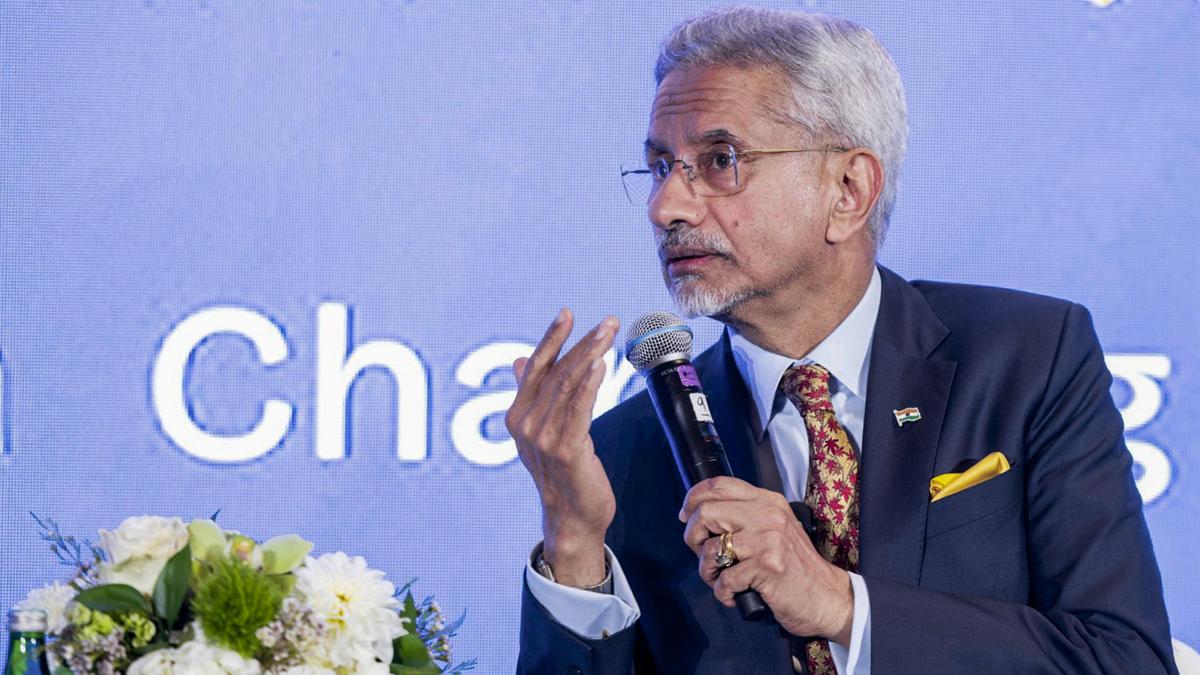
Jaishankar Calls Attacks on Civilian Shipping ‘Indefensible’

Indian Prime Minister Urges Integration of Social Reforms in Governance