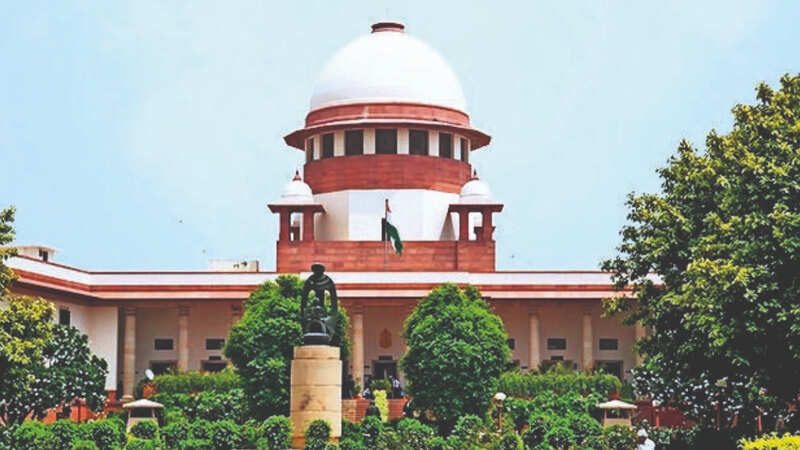
Atal Bihari Vajpayee memorial inaugurated as India marks 101st birth anniversary


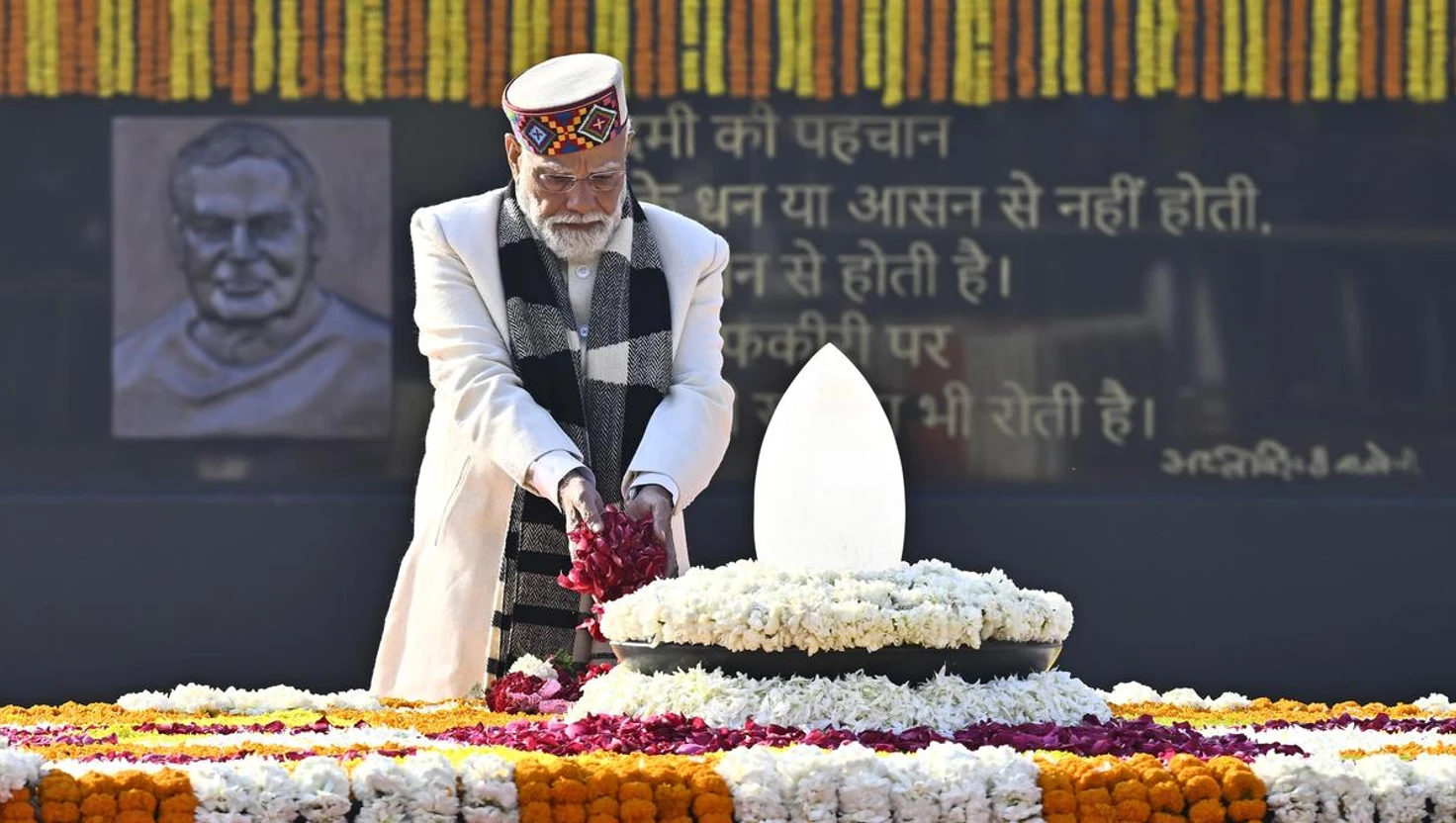
The memorial, named Rashtriya Prerna Sthal, has been developed as a large public complex dedicated to the life, ideals and political legacy of Atal Bihari Vajpayee, who served as India’s prime minister between 1996 and 2004. According to an official statement, the project was built over 65 acres at an estimated cost of 230 crore rupees and is intended to function as a long-term national institution.
Prime Minister Modi inaugurated the complex in the presence of several senior political leaders, including Defence Minister Rajnath Singh, Uttar Pradesh Governor Anandiben Patel and Chief Minister Yogi Adityanath. Members of the public gathered along the route to the venue, with many waving the Indian national flag during the prime minister’s visit.
The Rashtriya Prerna Sthal includes large bronze statues of Atal Bihari Vajpayee alongside two other prominent figures associated with the Bharatiya Jana Sangh and the ideological roots of the Bharatiya Janata Party: Syama Prasad Mookerjee and Pandit Deendayal Upadhyaya. Each statue stands approximately 65 feet high, making them among the most prominent features of the site.
A central attraction of the complex is a museum housed within a lotus-shaped structure covering about 98,000 square feet. The museum presents archival material, photographs and multimedia exhibits tracing the personal journeys, political thought and public contributions of Vajpayee, Mookerjee and Upadhyaya. After the inauguration, Prime Minister Modi and accompanying leaders toured the museum and viewed the displays.
In its official description, the Uttar Pradesh government said the memorial was conceived as a “permanent national asset” designed to promote leadership values, public service and cultural awareness. Authorities described it as an inspirational space aimed at educating younger generations about India’s political history and democratic traditions.
The inauguration in Lucknow coincided with commemorative events in New Delhi, where President Droupadi Murmu, Vice President C P Radhakrishnan and Prime Minister Modi attended a prayer ceremony at Sadaiv Atal, Vajpayee’s memorial in the capital. Several current and former ministers, parliamentarians and political leaders were also present.
Speaking after paying tribute at Sadaiv Atal, Prime Minister Modi said he felt privileged to honour Vajpayee on his birth anniversary. “His life, dedicated to public service and service to the nation, will always continue to inspire the people of the country,” he said, according to an official statement. He added that Vajpayee’s leadership and commitment to good governance remained a guiding influence for India’s development. Vajpayee was born on 25 December 1924 in the central Indian city of Gwalior. He entered politics at a young age and went on to build a parliamentary career spanning more than four decades. He was elected nine times to the lower house of parliament, the Lok Sabha, and twice to the upper house, the Rajya Sabha.
As India’s 13th prime minister, Vajpayee led coalition governments during a period of significant political transition. His tenure is associated with major policy decisions, including nuclear tests in 1998, which formally established India as a nuclear-armed state. During his time in office, India also fought the Kargil conflict with Pakistan in 1999, an episode that shaped regional security dynamics in South Asia.
Domestically, Vajpayee is credited with prioritising infrastructure development, including the expansion of national highways, rural road networks and telecommunications. His government also focused on economic reforms aimed at accelerating growth while maintaining political consensus within coalition arrangements.
Beyond policy decisions, Vajpayee was known for his oratory skills and literary interests. He published several collections of poetry and was widely regarded as a parliamentary speaker who could command respect across party lines. Political analysts have often noted his role in shaping a more inclusive and moderate image of his party during his years in leadership.
Vajpayee died in New Delhi on 16 August 2018 after a prolonged illness. In recognition of his public service, he was awarded the Padma Vibhushan in 1992 and later conferred the Bharat Ratna, India’s highest civilian honour, in 2015. The Indian government observes his birth anniversary each year as Good Governance Day.
Context
The inauguration of the Rashtriya Prerna Sthal reflects a broader effort by the Indian government to institutionalise memorials dedicated to key figures in the country’s political history. Supporters say such projects help preserve historical memory and civic values, while critics have occasionally questioned the scale and cost of large memorial complexes.
For the governing Bharatiya Janata Party, Atal Bihari Vajpayee remains a central reference point, both as a former prime minister and as a leader associated with democratic norms and consensus-building. As India continues to debate governance priorities and political legacy, Vajpayee’s career is frequently cited as a benchmark for leadership across ideological divides.
Canada and India Accelerate Trade Talks Ahead of December Visit
US President Donald Trump Addresses UN General Assembly in 2026

Richa Chadha Commends Salman Khan's Stand Against Body-Shaming
Delhi University Students Express Concerns Over Safety After Assault