RBI Announces Record ₹2.69 Lakh Crore Dividend to Indian Government


| 2025-05-23

The Reserve Bank of India's signage is seen at the entrance of its Mumbai headquarters
India’s central bank, the Reserve Bank of India, approves a record ₹2.69 lakh crore dividend payout to the government for fiscal 2024-25, bolstering public finances.
India’s central bank, the Reserve Bank of India (RBI), has announced its largest-ever surplus transfer to the central government, with a dividend payout of ₹2.69 lakh crore (approximately $32.3 billion) for the financial year 2024-25. The decision was finalised at the 616th meeting of the RBI’s Central Board of Directors, chaired by Governor Sanjay Malhotra, in Mumbai on Friday.
According to a statement from the RBI, the board reviewed both global and domestic economic conditions and associated risks before approving the transfer. This year’s dividend represents a 27 per cent increase from the ₹2.1 lakh crore transferred in the previous financial year.
The payout is expected to provide crucial support to the government of Prime Minister Narendra Modi as it targets a fiscal deficit of 4.4 per cent of gross domestic product for the current year. Economists suggest that such a substantial dividend will help the government manage fiscal pressures, offsetting shortfalls in tax revenue and potential expenditure increases.
The Reserve Bank noted that the surplus for the year was calculated under a revised Economic Capital Framework (ECF), a policy determining how much of the bank’s earnings are retained as reserves and how much is transferred to the government. The ECF, based on recommendations from a committee led by former RBI Governor Bimal Jalan, has guided dividend payments since 2019.
As part of the latest review, the RBI board also increased the Contingent Risk Buffer (CRB) to 7.5 per cent from the earlier 6.5 per cent, strengthening the institution’s financial resilience against unforeseen risks.
Foreign Exchange Gains and Investment Returns
The record surplus follows what analysts believe has been a year of strong gains for the Reserve Bank. Economists have pointed to profitable returns from the central bank’s management of government bond holdings and foreign exchange reserves, particularly benefiting from the depreciation of the Indian rupee against the US dollar, which inflated the value of its foreign assets in local currency terms.
Further details on the central bank’s earnings and financial operations are expected in its annual report, which is due to be published in the coming days.
Every year, the Reserve Bank generates income from investments in government securities, changes in the valuation of its foreign currency holdings, and fees from printing currency notes. A portion of this income is retained to maintain the financial strength of the institution, with the remainder transferred to the government as surplus.
Economic Capital Framework Under Review
The Economic Capital Framework itself was recently reviewed, with government sources indicating to the Press Trust of India (PTI) that the core recommendations of the Bimal Jalan committee remain relevant, though minor adjustments may be considered for the coming years. The framework governs the distribution of the RBI’s profits, ensuring a balance between fiscal support to the government and the central bank’s own financial stability.
A source familiar with the discussions said, “The Jalan committee formula has stood the test of time, but given steady economic growth, it may be prudent to refine the surplus transfer policy for the next five years.”
Context: India’s Fiscal Balancing Act
India has been aiming to narrow its fiscal deficit, the gap between government expenditure and revenue, which widened during the pandemic years due to increased public spending and weaker tax collections. For the financial year ending March 2024, India’s fiscal deficit stood at 5.8 per cent of GDP, with the government now targeting a reduction to 4.4 per cent.
A sizeable dividend from the central bank helps ease this fiscal pressure, providing a buffer that can support infrastructure investments, welfare schemes, or offset lower-than-expected tax inflows. It also strengthens the government’s financial position amid ongoing trade negotiations and potential policy measures such as import duty adjustments.
In recent years, larger-than-usual dividend payments from the RBI have become an important tool for the government in managing its fiscal strategy, particularly when tax revenues fluctuate due to external economic conditions.
The Reserve Bank’s latest transfer marks a continuation of this trend, though officials have indicated a careful balancing act between bolstering government finances and preserving the RBI’s capacity to manage economic shocks.
The RBI’s annual report, which will elaborate on the sources of this year’s record surplus, is awaited by policymakers and markets alike for insights into the bank’s financial strategy and future dividend prospects.
According to a statement from the RBI, the board reviewed both global and domestic economic conditions and associated risks before approving the transfer. This year’s dividend represents a 27 per cent increase from the ₹2.1 lakh crore transferred in the previous financial year.
The payout is expected to provide crucial support to the government of Prime Minister Narendra Modi as it targets a fiscal deficit of 4.4 per cent of gross domestic product for the current year. Economists suggest that such a substantial dividend will help the government manage fiscal pressures, offsetting shortfalls in tax revenue and potential expenditure increases.
The Reserve Bank noted that the surplus for the year was calculated under a revised Economic Capital Framework (ECF), a policy determining how much of the bank’s earnings are retained as reserves and how much is transferred to the government. The ECF, based on recommendations from a committee led by former RBI Governor Bimal Jalan, has guided dividend payments since 2019.
As part of the latest review, the RBI board also increased the Contingent Risk Buffer (CRB) to 7.5 per cent from the earlier 6.5 per cent, strengthening the institution’s financial resilience against unforeseen risks.
Foreign Exchange Gains and Investment Returns
The record surplus follows what analysts believe has been a year of strong gains for the Reserve Bank. Economists have pointed to profitable returns from the central bank’s management of government bond holdings and foreign exchange reserves, particularly benefiting from the depreciation of the Indian rupee against the US dollar, which inflated the value of its foreign assets in local currency terms.
Further details on the central bank’s earnings and financial operations are expected in its annual report, which is due to be published in the coming days.
Every year, the Reserve Bank generates income from investments in government securities, changes in the valuation of its foreign currency holdings, and fees from printing currency notes. A portion of this income is retained to maintain the financial strength of the institution, with the remainder transferred to the government as surplus.
Economic Capital Framework Under Review
The Economic Capital Framework itself was recently reviewed, with government sources indicating to the Press Trust of India (PTI) that the core recommendations of the Bimal Jalan committee remain relevant, though minor adjustments may be considered for the coming years. The framework governs the distribution of the RBI’s profits, ensuring a balance between fiscal support to the government and the central bank’s own financial stability.
A source familiar with the discussions said, “The Jalan committee formula has stood the test of time, but given steady economic growth, it may be prudent to refine the surplus transfer policy for the next five years.”
Context: India’s Fiscal Balancing Act
India has been aiming to narrow its fiscal deficit, the gap between government expenditure and revenue, which widened during the pandemic years due to increased public spending and weaker tax collections. For the financial year ending March 2024, India’s fiscal deficit stood at 5.8 per cent of GDP, with the government now targeting a reduction to 4.4 per cent.
A sizeable dividend from the central bank helps ease this fiscal pressure, providing a buffer that can support infrastructure investments, welfare schemes, or offset lower-than-expected tax inflows. It also strengthens the government’s financial position amid ongoing trade negotiations and potential policy measures such as import duty adjustments.
In recent years, larger-than-usual dividend payments from the RBI have become an important tool for the government in managing its fiscal strategy, particularly when tax revenues fluctuate due to external economic conditions.
The Reserve Bank’s latest transfer marks a continuation of this trend, though officials have indicated a careful balancing act between bolstering government finances and preserving the RBI’s capacity to manage economic shocks.
The RBI’s annual report, which will elaborate on the sources of this year’s record surplus, is awaited by policymakers and markets alike for insights into the bank’s financial strategy and future dividend prospects.

Reliance Retail acquires Kelvinator, The Coolest One
Reliance Retail has purchased the Kelvinator brand from Electrolux for nearly ₹160 crore, aiming to strengthen its position in India's consumer durables market.
| 2025-07-19

Saiyyara has shattered every myth about launching newcomers. No big names, no big PR
Madhur Bhandarkar praises debut film 'Saiyaara' for its raw talent and storytelling, marking a shift in Bollywood's approach to newcomers.
| 2025-07-19
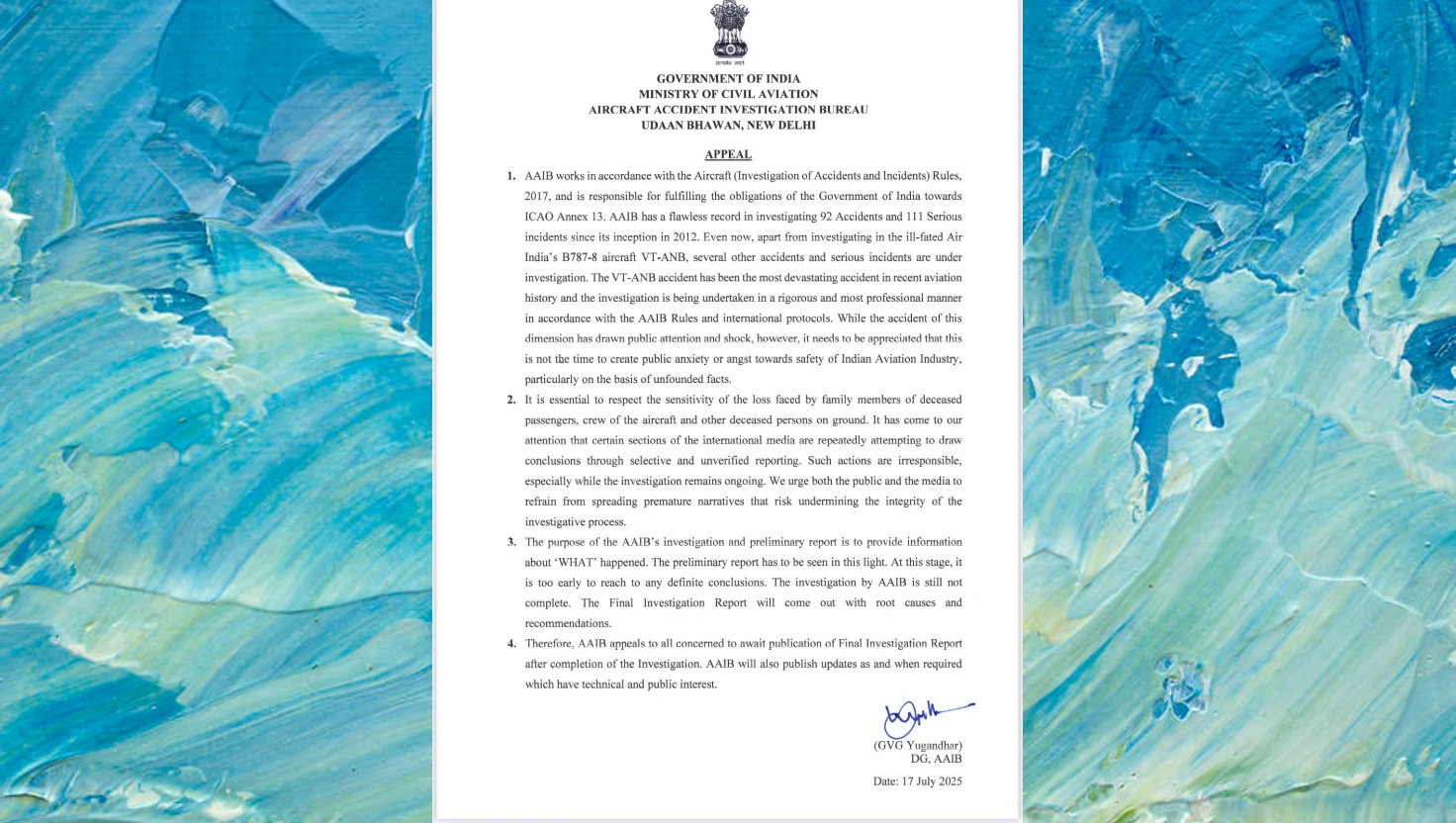
India slams reports blaming pilots for Air India crash
India's AAIB disputes US media assertions regarding Air India AI 171 crash, highlighting ongoing investigation and sensitivity towards victims' families.
| 2025-07-18

India Secures Four-Wicket Win in ODI Series Opener Against England
India achieves a four-wicket victory over England in the ODI series opener, led by Deepti Sharma's unbeaten 62 runs.
| 2025-07-17

Air India inspection claims no problems found with Boeing 787 fuel control switches
Air India has conducted thorough inspections of its Boeing 787 fuel control switches, reporting no problems following a DGCA directive.
| 2025-07-17