Balance of trade one-sided, need to address non-tariff barriers & regulatory impediments: EAM Jaishankar at India-Russia Business Forum


| 2024-11-11

External Affairs Minister S Jaishankar speaks at the India-Russia Business Forum in Mumbai on November 11, 2024.
Goal of bilateral trade reaching USD 100 billion by 2030 more than realistic, says EAM Jaishankar
Maintaining that the balance of trade between India and Russia was one-sided, External Affairs Minister (EAM) S Jaishankar has highlighted the need to speedily address non-tariff barriers and regulatory impediments. He has also emphasised the importance of mutual settlement of trade in national currencies in addition to looking into logistical challenges like shopping and insurance that are faced by the business community .
EAM Jaishankar was addressing the India-Russia Business Forum in Mumbai on Monday (November 11, 2024), a day ahead of the India-Russia Inter-Governmental Commission meeting scheduled to be held in New Delhi.
“Our bilateral trade is today at USD 66 billion. This makes the goal of reaching USD 100 billion by 2030 more than realistic. The balance of trade however needs urgent redressal since it is so one-sided. It is imperative that non-tariff barriers and regulatory impediments are speedily addressed for this to happen,” he said.
During the course of his address, EAM Jaishankar spoke of the “great importance” of mutual settlement of trade in national currencies, especially in the current circumstances. “Special Rupee Vostro Accounts are right now an effective mechanism. However, even in the short run, a better trade balance with national currency settlements is the answer,” he stated.
He also touched upon concerns of the business community like banking and payment related issues, logistical challenges like shipping, insurance and reinsurance as well as market access. “Obviously, we have to find solutions that work to the comfort level of those actually involved in trade,” he remarked.
Additionally, EAM Jaishankar made the following key observations:
1. Negotiations on the India-Eurasian Economic Union trade in goods, which commenced in March this year, need to be taken forward vigorously.
2. The two sides should expedite negotiations on the Bilateral Investment Treaty.
3. The programme for cooperation in regard to the Russian Far-East from 2024-29, which was signed in July this year, encourages other related activities including in the connectivity sphere.
4. Signing of a bilateral agreement between the customs authorities of the two countries in May 2024 on Authorized Economic Operators has had a big impact on smoothening the ease of doing trade.
5. The three connectivity initiatives between India and Russia – the International North-South Transport Corridor (INSTC), the Chennai-Vladivostok Corridor and the Northern Maritime Route – need continued attention to realize their full potential.
6. A growing Russian appreciation of Make In India as a program to deepen business will help to take forward the cooperation in many domains.
‘India-Russia Relationship not Transactional’
EAM Jaishankar used the opportunity to highlight that the approach of the two countries was not transactional but based on long-term goals.
“We are all aware of the complementary nature of our respective economies. If we recognize that fully, then it also follows that our approach is not transactional but aimed at building long-term partnerships,” EAM Jaishankar pointed out.
“A partnership between an India that has an 8% growth rate for multiple decades ahead, and a Russia that is a key natural resources provider and a major technology leader, will serve both of them and the world well,” he remarked.
EAM Jaishankar also referred to energy domains such as oil, gas, coal and uranium, where India will always be a major player in the international markets. This also applies to the demand for fertilizers of various kinds, he added. “Constructing a mutually beneficial arrangement will help us both address the volatility and the uncertainty of our times,” EAM Jaishankar noted.
Meeting in Moscow for the 22nd India-Russia Annual Summit on July 9, 2024, Prime Minister Narendra Modi and Russian President Vladimir Putin announced a target for bilateral trade at USD 100 billion by 2030.
The two sides also decided to prepare a Programme for the development of promising areas of Russian-Indian economic cooperation till 2030, or Programme-2030. They reaffirmed readiness to contribute to the implementation of the initiatives, projects, measures and activities provided for by Programme-2030.
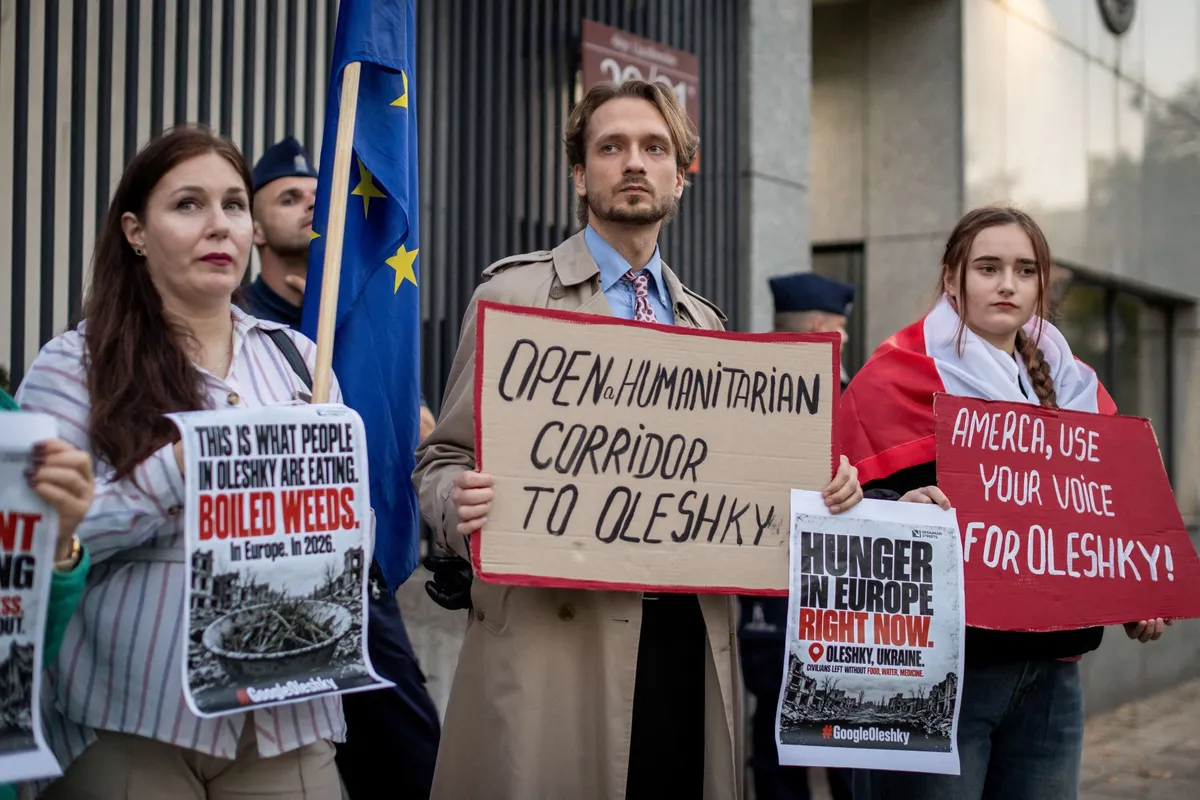
Ceasefire Agreed in Oleshky Amid Ukraine's Humanitarian Crisis
Russia and Ukraine reach a ceasefire deal in Oleshky as humanitarian conditions worsen for civilians, allowing aid and evacuation efforts.
| 2026-10-24
Donald Trump Hints at US Interest in Cuba After Conflict in Iran
Former President Donald Trump suggests a potential US focus on Cuba following military operations in Iran, stirring international speculation.
| 2026-10-24
UK Court Rules Against India in RAKIA Investment Dispute
The English Court of Appeal dismisses India's appeal over a bauxite supply agreement dispute with Ras Al Khaimah Investment Authority.
| 2026-10-24
India Raises Concerns Over Chinese Border Patrolling Deviations
India's Ministry of External Affairs addresses China's border patrol irregularities amid rising tensions along the Line of Actual Control.
| 2026-10-24
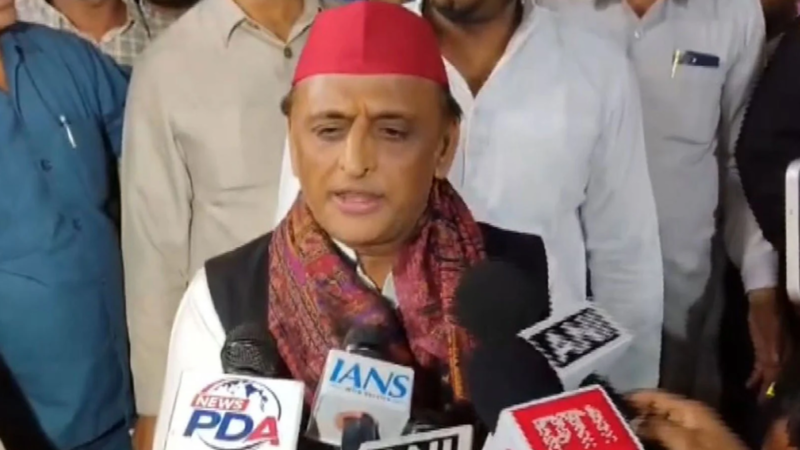
Akhilesh Yadav Questions Seat-Sharing Figures Amid Congress Demand
Samajwadi Party leader Akhilesh Yadav casts doubt on seat-sharing claims as Congress seeks 175 to 200 seats ahead of upcoming elections.
| 2026-10-24