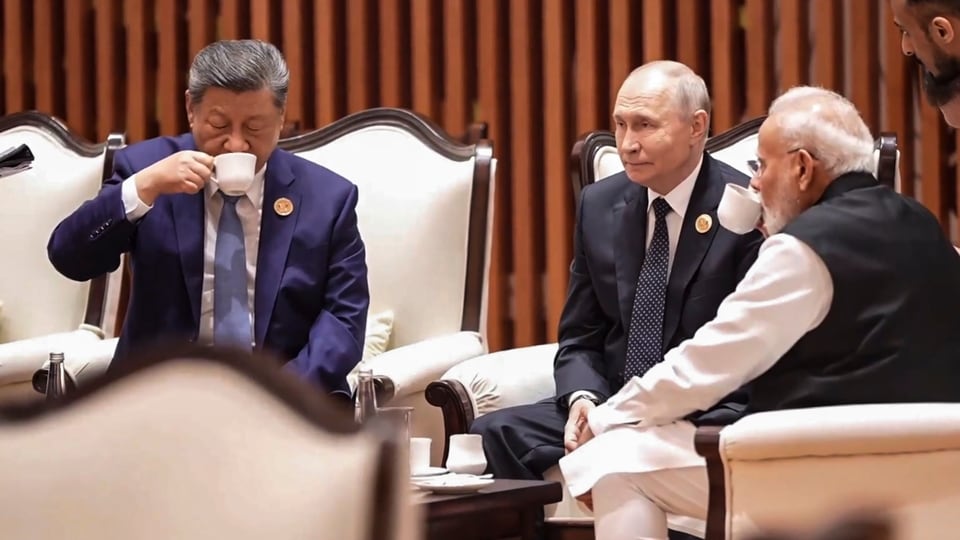
US Faces Historic Dual Nuclear Threat from China and Russia


The United States is currently confronting a unique situation, requiring the deterrence of both China and Russia, two major nuclear powers, simultaneously. This unprecedented challenge arises amid heightened tensions involving NATO allies. Robert Kadlec, the US Assistant Secretary of Defense for Nuclear, Chemical, and Biological Defense Programs, labelled this scenario as a "now-crisis" during a recent Senate Armed Services Committee hearing. He stated, "For the first time in its history, the United States will face the challenge of deterring two nuclear peers, China and Russia, simultaneously, as well as regional powers with growing capabilities. This is not a hypothetical future problem. This is a now-crisis. We’re in a new and more dangerous era." Kadlec asserted that Washington would strive to enhance the credibility and effectiveness of NATO's nuclear deterrence mission. However, the ongoing conflict in Iran has revealed frictions within the transatlantic alliance. Former President Donald Trump expressed frustration over European allies' lack of military support during the Iran War, referencing NATO as a "paper tiger". He has accused NATO allies of treating the alliance as a "one-way street", where the United States bears the majority of the responsibility for collective defence without receiving adequate support in return. Trump indicated he is "strongly considering" withdrawing the United States from NATO, suggesting such a reconsideration is more than just a possibility. In an interview published in early April by Britain’s Telegraph newspaper, he commented, "I was never swayed by NATO. I always knew they were a paper tiger, and Putin knows that too, by the way." This principle of collective defence, encapsulated in Article 5 of NATO's founding treaty, states that an attack against one member is treated as an attack on all. Despite its significance, Article 5 has been invoked only once when the United States was attacked on September 11, 2001. Reports from The Wall Street Journal indicate that Trump is contemplating implementing penalties against certain NATO allies, including the possible withdrawal of US troops from European nations. These measures are seen as necessary to underscore the consequences of insufficient support from allies during critical times. The administration believes that US military support must be reciprocal and that nations aiding the US should be rewarded. Consequently, there are plans to reposition US troops from countries that did not support Washington towards those that did. Currently, approximately 84,000 US troops are stationed at various bases throughout Europe. These military installations have served as crucial components of European security throughout the post-Second World War era, taking on renewed significance following Russia's invasion of Ukraine. The US administration is also weighing the closure of a military base in a country that vocally opposed the US's actions in Iran: Spain. Spanish officials, including Prime Minister Pedro Sánchez and Defence Minister Margarita Robles, have vehemently condemned the Iran War, framing their stance as a defence of international law. Furthermore, Turkey and Italy have similarly expressed opposition, with the latter denying US military aircraft access to its Sigonella air base in Sicily. Trump has been openly critical of Italian Prime Minister Giorgia Meloni, stating he is "shocked" by her response to Iran's nuclear capabilities and indicating disappointment in her contributions to NATO. France has also denied certain operations for logistical support, while Germany has rejected the idea of direct military involvement, reinforcing public sentiment against the conflict. Conversely, Eastern European nations, including Poland and the Baltic states, have extended stronger support for the US, citing shared threats regarding Iran and its connections with Russia. This dynamic reflects a complex predicament for the United States. On one hand, it relies on NATO for a unified approach against the nuclear threats posed by China and Russia; on the other, it considers the serious ramifications of distancing itself from this key military alliance.
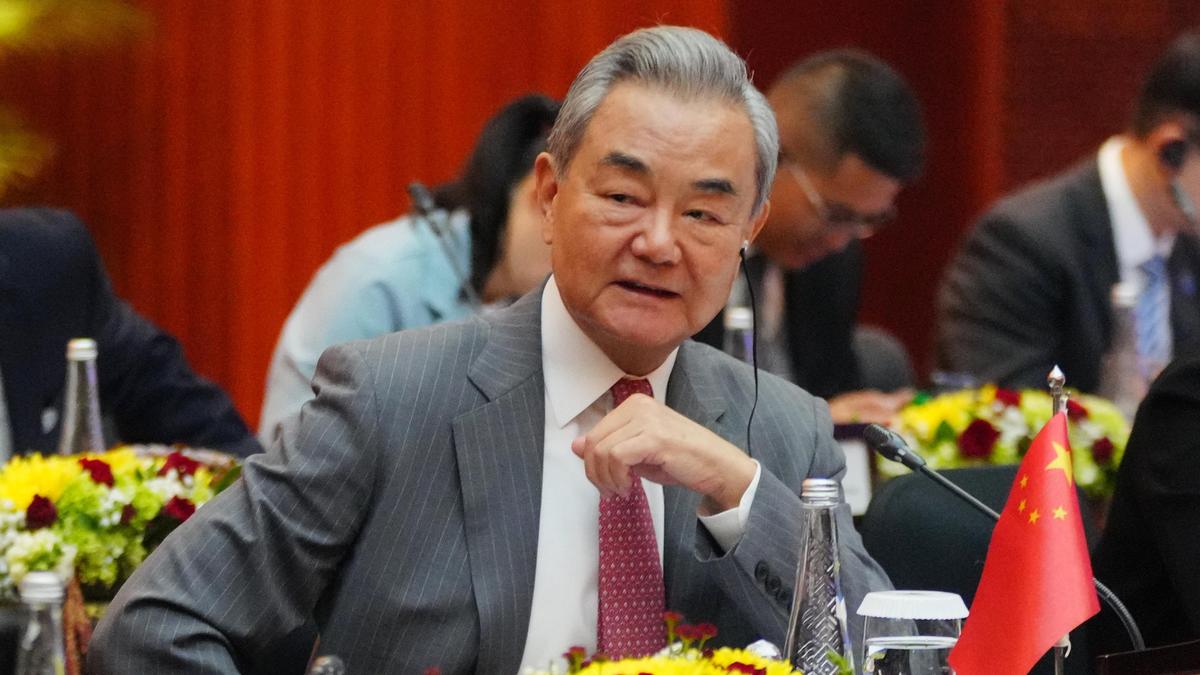
China's Foreign Minister Urges Strengthening International Ties

BJP Maintains Position Despite Strong Performance by Independents in Rajasthan
India to Supply Nepal with Daily Electricity After Flood Damage

Hyderabad Introduces Gold-Plated Ganesh Idol Adorned with Diamonds