US Army Demolishes Stockpile of Explosive Material in Iowa


The United States Army conducted a controlled detonation of its entire stockpile of lead azide on Wednesday morning at the Iowa Army Ammunition Plant in Middletown, Iowa. This planned explosion aimed to dispose of approximately 4,400 kilograms (9,700 pounds) of this explosive material, which is principally used in detonators.
The blast, occurring at around 10:00 AM ET, sparked significant public concern regarding potential health and environmental implications. Environmental authorities indicated that the controlled explosion could lead to the release of toxic chemicals within a radius of 160 kilometres (100 miles) from the site. While images captured shortly after the detonation showed a white plume of smoke rising over the town, the extent of any resulting contamination varied with weather conditions.
Witnesses reported differing experiences of the explosion. A local reporter described a prominent shockwave felt in the vicinity, while Tim Brandt, a resident of Burlington, stated that the explosion was less dramatic than anticipated, likening it to minor noise-makers that produce little impact when thrown.
Following the detonation, former President Donald Trump remarked on Truth Social that “early reports from Iowa are that the Army’s mitigation efforts have far exceeded expectations.”
The head of the U.S. Environmental Protection Agency (EPA), Lee Zeldin, stated that preliminary reports indicated that the detonation was successful in its containment, noting that air monitors showed no detection of airborne lead throughout the region.
In a release, the EPA confirmed that all real-time air quality monitors remained operational during the event and that they recorded no hazardous levels of lead. In light of these findings, the agency launched a website for continuous monitoring of air quality along the potential plume route.
Adam Telle, the acting Army secretary, expressed pride in the Soldiers’ handling of the disposal process and assured the public that the risk of uncontrolled detonation had been mitigated. He acknowledged the previous administration’s role in fostering a comprehensive government approach to addressing the situation faced by Iowa residents.
Lead azide, a highly sensitive explosive that is typically found in a white powder or crystalline form, gained attention during a routine inspection in March which revealed that stored samples had partially crystallised. This deterioration raised the potential for accidental ignition under certain conditions.
Rob Sand, Iowa's governor-elect, stressed the need for transparency regarding the event. His statement highlighted ongoing testing to further assess the situation while expressing gratitude for those involved in ensuring safety during the detonation.
In anticipation of the detonation, the Army circulated new maps indicating that any potential dispersal path would likely extend southwest of Middletown and into northern Missouri. They advised heightened caution, particularly for vulnerable populations, including children and pregnant women, urging them to avoid outdoor activities in potentially affected zones.
After the explosion, the Federal Emergency Management Agency (FEMA) recommended local residents who did not evacuate to shelter in place, continuing to adhere to instructions from the EPA and other agencies. They also facilitated safe lodging for those who had evacuated.
An emergency alert prior to the detonation warned that residents within a five-mile radius might need to evacuate while advising those up to 20 miles away to remain indoors with windows closed to prevent exposure to airborne lead particles and to mitigate noise and vibration.
Originally slated for last Friday, the detonation faced multiple delays due to mounting public concern and legal challenges. A federal court later ruled in favour of the Army proceeding with the plan, confirming that the EPA had incorporated sufficient safeguards within an emergency permit aimed at minimising dispersal of pollutants.
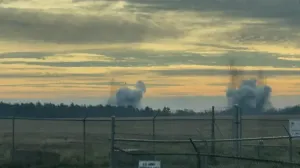
US Army Detonates Lead Azide Stockpile Amid Public Concern

Massive Fire Breaks Out After Fuel Tanker Crash Near Cairo

India Condemns Attack on Riyadh Tower; Injured Nationals Reported

Sheikh Hasina Plans to Return to Bangladesh Amid Political Turmoil