Turkiye and Qatar Strengthen Defence Ties with New Agreement


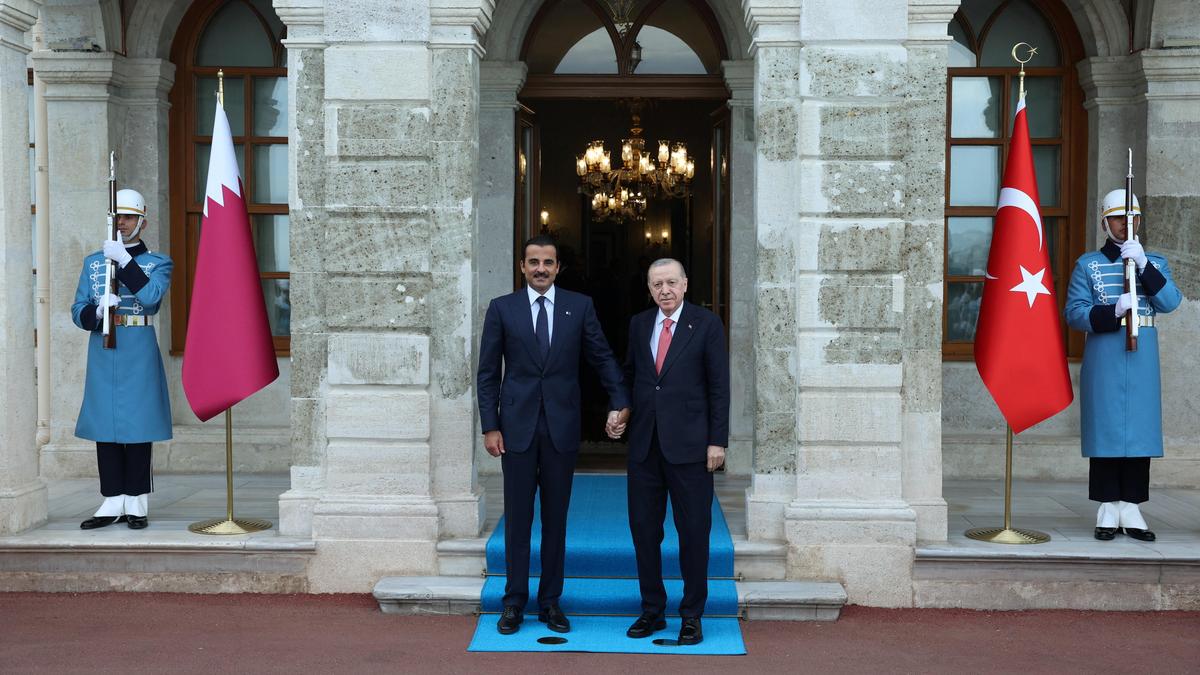
Turkiye and Qatar formalised a mutual defence agreement on Friday, aimed at bolstering their strategic partnership in light of increased regional instability. The agreement was signed in Istanbul after discussions between Turkish President Recep Tayyip Erdogan and Qatari Emir Sheikh Tamim bin Hamad Al Thani.
The Turkish presidency emphasized that President Erdogan articulated a commitment to prevent further conflict in the Gulf region. 'We will continue working together to prevent the resurgence of war and to establish avenues for dialogue and peace,' the statement read.
In his comments on social media, Sheikh Tamim described the deal as a 'strategic partnership' and noted the importance of ongoing collaboration. He expressed intentions to build upon previous achievements and identify key areas for future cooperation during his talks with President Erdogan.
The signed agreement is part of a larger strategy reflecting the concerns of Gulf nations regarding security amid the ongoing conflicts in the region. Security analyst Yusuf Alabarda explained that countries are increasingly recognising the inadequacy of existing security guarantees from the United States.
Alabarda stated, 'The Turkish presence in Qatar is crucial, and it's likely that further military support, including air defence systems, will be dispatched to ensure Qatar's security.' This reinforces Turkiye’s strategic interest in the Gulf, especially given the current tensions stemming from the Iran conflict.
The mutual defence pact comes against the backdrop of Turkiye’s recent participation in regional defence agreements. In August, Turkiye, Pakistan, and Saudi Arabia ratified a defence pact designed to provide mutual support amid potential threats. This agreement, which was endorsed by the Turkish parliament last week, links Turkiye, a NATO member with significant military capabilities, with Pakistan, the only nuclear-armed nation in the Muslim world.
On a broader scale, in October, Qatar, alongside Indonesia and Pakistan, entered into a multilateral memorandum of understanding to enhance defence cooperation, further signifying a shift towards stronger collaborative security frameworks in the region.
As regional dynamics evolve, these agreements reflect an adaptive approach by Gulf nations to safeguard their interests and maintain stability amidst ongoing geopolitical challenges.
Trump, Putin, and Xi to Meet at APEC Summit in Shenzhen, China
Congress Criticises Adani for Dramatic Cost Cut in Maharashtra Project

Urban Infrastructure Crucial for India's Manufacturing Growth
Delhi's Air Quality Deteriorates, Becomes Severely Polluted