Trinamool Congress Seeks Disqualification of Rebel MPs Over Defection


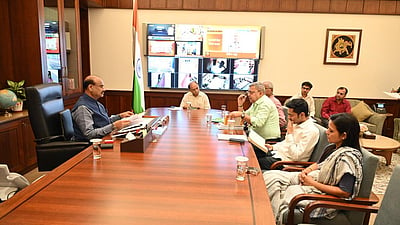
The Trinamool Congress (TMC) has initiated proceedings to disqualify 20 of its rebel Members of Parliament (MPs) by submitting petitions to the Lok Sabha Speaker, Om Birla. On Friday, Abhishek Banerjee, the TMC's National General Secretary, presented the party's case during a meeting with the Speaker, where he delineated how these MPs allegedly contravened the anti-defection law. Following the nearly hour-long discussion, Banerjee expressed hope that the Speaker would act in accordance with parliamentary rules, positioning him as a guardian of the institution rather than a supporter of the ruling government. He urged the Speaker to resolve the matter expeditiously, consistent with constitutional mandates. Sources from the Lok Sabha Secretariat indicated that the Speaker would consider all perspectives and analysis before reaching a decision. The Speaker may consult legal professionals due to the complexity of the issues involved, specifically referencing divergent judicial interpretations concerning the Tenth Schedule of the Constitution, which governs anti-defection laws. Abhishek Banerjee's meeting with the Speaker occurred after members of the rebel faction requested separate seating arrangements in the Lok Sabha, claiming they had merged with a lesser-known party, the Nationalist Citizens Party of India (NCPI). The TMC asserts that this scenario marks a historic first, highlighting the submission of individual disqualification petitions against a group accused of defection. Mahua Moitra, a TMC MP, reportedly submitted around 600 pages of supporting documents to the Speaker's Office prior to the meeting. Banerjee contended that the constitutional stipulations clearly define disqualification grounds for MPs who renounce their party's membership. He commented, 'Twenty people met the Speaker and asserted they should be viewed as a distinct group. Subsequently, we learned they had claimed to join another political party, which most have not heard of.' He underscored that if MPs are elected using a particular party's symbol, any claim to a new affiliation after two years must lead to a loss of their membership. He also referenced the provisions of Paragraph 2(1)(a) of the Tenth Schedule, which assert that voluntary resignation from a party constitutes grounds for disqualification. Banerjee drew a parallel between political membership and employment, stating, 'Just as a journalist cannot serve two employers, one cannot simultaneously belong to two political parties.' He further instructed that the claim of a merger requires two-thirds of a party to integrate into a new entity, a threshold he argues has not been met in this instance. He called for the rebel MPs to resign properly and seek re-election under a different party's banner, allowing the voters of West Bengal to decide their fates, adding that the public would not forgive their actions, which he labelled as a betrayal of democratic principles. Banerjee speculated about motives behind the rebellion, stating that some MPs are seeking protection from investigative agencies, while others are facing intimidation or financial inducements. He encouraged any MP who finds his allegations objectionable to pursue legal action, promising to present evidence in court. Prior to the Friday meeting, Banerjee was originally summoned for a discussion on Monday but could not attend due to an appearance before the Enforcement Directorate in a separate matter.
Indian Government Declares Shahzad Bhatti Network a Terrorist Outfit
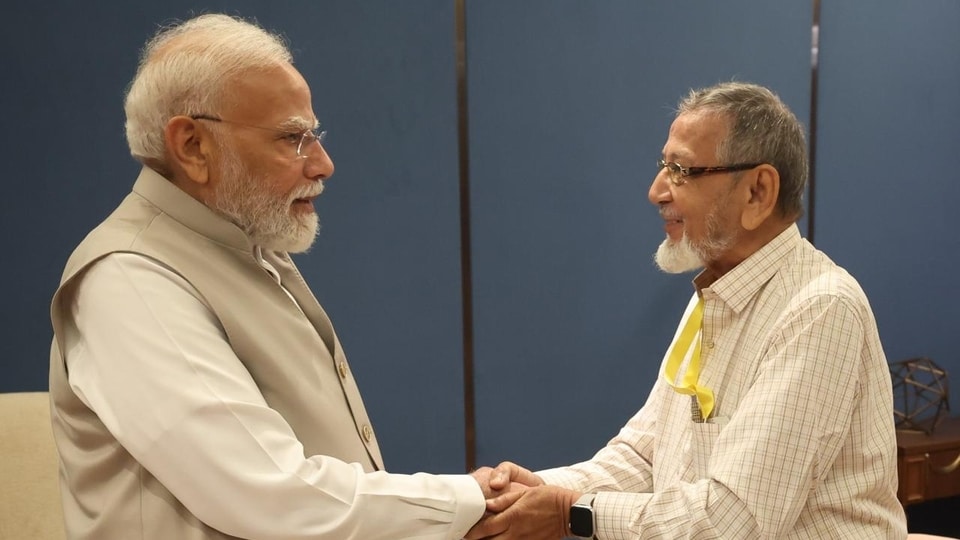
PM Modi Helps Former Schoolmate Recover Land After Long Dispute

Naval Collision in Arabian Sea Heightens India-Pakistan Tensions

Telangana CM Launches Inquiry Into Alleged Land Irregularities