Strait of Hormuz Attacks Escalate Amid Diplomatic Stalemate


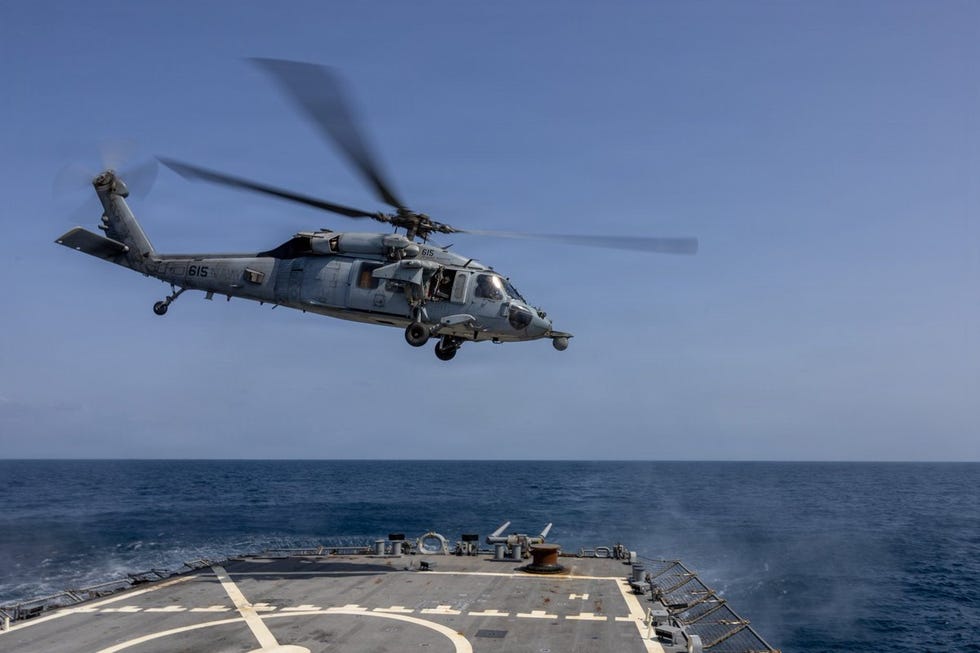
Strikes in the Strait of Hormuz have escalated once again as diplomatic efforts to resolve tensions between Iran and the United States remain stalled. The Islamic Revolutionary Guard Corps (IRGC) reported that a crude oil supertanker struck a naval mine, resulting in a significant fire while navigating an unauthorised route with its navigation systems turned off. The IRGC issued a warning that any oil tanker disregarding the established security protocols would face a similar fate.
On Sunday, a senior Iranian military official asserted that Iran's armed forces are ready for both offensive and defensive operations. Seven months after the United States and Israel initiated military actions against Iran, Habibollah Sayyari, the chief of staff and joint coordinator of the Iranian army, stated, "We have struck blows against enemy vessels. If anything else happens against Iran, we will strike them again." This statement follows reports from the United Kingdom Maritime Trade Operations (UKMTO) detailing military actions and warnings directed at vessels in the region.
The UKMTO indicated that ship masters near Ras al-Khaimah in the United Arab Emirates were advised to move from their positions due to the escalating military activities. Additionally, on Sunday afternoon, it was reported that an unidentified projectile struck a tanker transiting the Strait of Hormuz.
In a related incident, the UAE coastguard announced it had rescued 22 crew members following a fire on an unnamed tanker near its territorial waters, although the cause of the blaze has not been identified.
The United States Central Command (CENTCOM) released footage demonstrating a fighter jet bombing a Panama-flagged cargo vessel in the Gulf of Oman to enforce a naval blockade targeting Iran's southern ports. CENTCOM reported that since the reimposition of the blockade in mid-July, measures have led to the disabling of four commercial vessels, turning around 135 ships and destroying ten tankers associated with Iran. US officials maintain that no Iranian oil has been exported through the blockade.
Recent weeks have seen at least a dozen ship attacks, the highest recorded since the conflict began, including incidents off the northern coast of Qatar. Such actions indicate the rising risks not only within the immediate vicinity of the Strait of Hormuz but across adjacent waters as the US and Iran contest control over the region. The attacks on vessels have resulted in a decline in energy flows, with crude oil passing through the strait decreasing to approximately 8.5 million barrels per day, a significant reduction compared to pre-war levels.
To facilitate a resolution and reopen the vital strait, Iran has reiterated the importance of reinstating a memorandum of understanding that was agreed upon in June. Tehran is also seeking the US's support for an Iran-Oman agreement that outlines coordinated entry and exit routes for ships navigating the strait.
Mediated communications between the two nations continue, yet no significant breakthrough is anticipated in the near future, particularly with key political events approaching in the US and Israel. US Vice President JD Vance indicated last week that a meaningful reduction in Iran's nuclear enrichment capabilities is essential for ending the conflict, suggesting a potential shift from previously absolute demands for zero enrichment on Iranian soil.
Iranian officials have responded by asserting that while negotiations can encompass cuts to high-enriched uranium, complete abandonment of enrichment is not an option. Mohammad Eslami, head of Iran's nuclear programme, emphasised during a recent speech the critical role of the domestic nuclear industry, stating, "The achievements of our indigenous nuclear industry cannot be stopped." Furthermore, Behrouz Kamalvandi, spokesperson for the Atomic Energy Organization of Iran, reiterated that the country will pursue its interests through both diplomatic and military strategies. He remarked, "If those interests can be secured through diplomacy, that is much better, but if not, we will secure them in the field of battle."
India Condemns Assault on Vessel with Indian Crew near Oman

Foreign Portfolio Investors Withdraw ₹44,166 Crore from India

Ekta Kapoor Announces Sequel to The Dirty Picture After 15 Years

India Develops Strategy to Counter Abhishek Sharma in Cricket Match