SpaceX Receives Approval for Million-Satellite Deployment by FCC


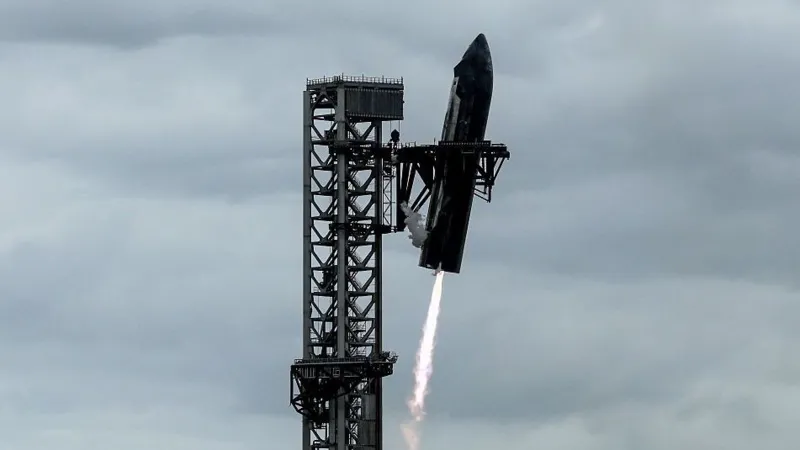
The Federal Communications Commission (FCC) in the United States has granted SpaceX approval to deploy a million satellites in Earth’s orbit, marking a significant first in space infrastructure. The initiative, branded as Starmind, aims to create data centres in space that will harness solar energy to process data for artificial intelligence and transmit results back to Earth.
This decision comes amid increasing public resistance to the construction of data centres on land, which many argue consume excessive energy and water. SpaceX, led by entrepreneur Elon Musk, contends that these orbital data centres represent a more economical and sustainable method for addressing the surging demand for AI processing power that exceeds terrestrial limits.
Brendan Carr, Chairman of the FCC, expressed optimism regarding the project. In a recent statement, he noted that it “opens a bold new frontier for the computing infrastructure needed to power America's leadership and growth”. He added, “This is the kind of American ingenuity that can unite our strengths in space and advanced technology, reinforce our economic leadership, and expand prosperity here at home.”
Responding to the FCC's ruling, Musk conveyed his gratitude on social media platform X, stating, “Much appreciated. This will be a great asset to America and the world.”
According to the FCC, SpaceX must commence deployment of the satellites by no later than November 2033. Under the terms of the licence, the company is required to have 10% of the satellites operational by November 2035, with the target increasing to 50% by November 2038. SpaceX has indicated plans to launch its first Starmind satellite as early as next year.
It remains uncertain whether the company will deploy exactly one million satellites or if it has obtained authorisation for an even larger fleet. The satellites associated with the Starmind project are expected to operate in low-Earth orbit, at altitudes between 500 to 2,000 kilometres (310 to 1,242 miles), similar to SpaceX’s existing Starlink network.
These new satellites will link with the Starlink system, facilitating data communication back to Earth. The FCC has described the solar-powered satellite network as potentially advancing humanity towards a Kardashev II civilisation, a theoretical concept proposed by an astronomer in the 1960s, which describes a society capable of harnessing the total energy of its home star.
The concept of orbiting data centres is also being developed by other technology companies, such as Google and Blue Origin, as a greener alternative to traditional data centres that are energy-intensive and require substantial water for cooling.
As the reliance on AI technology grows, so does the demand for data storage and processing capabilities worldwide. However, finding suitable locations for new data centres proves increasingly challenging due to their expansive nature and the community pushback against local construction.
Data centres have emerged as a critical issue in U.S. elections, notably the midterm elections, where candidates have pledged to impose stricter regulations on their establishment. An expert pointed out the considerable costs associated with launching hardware into orbit and the complex requirements for protecting, cooling, and powering these systems. Furthermore, the rising volume of space debris poses risks to operational satellites.
Additional concerns have been raised about the increasing number of low-orbit satellites and the potential for collisions, which could damage spacecraft or result in debris falling back to Earth. While there have been allegations that the Starlink project contributes to space congestion, Musk has dismissed claims that it occupies excessive orbital space or hampers competition in satellite operations. This approved satellite deployment by SpaceX represents a pioneering step in the evolving landscape of space-based data processing solutions.

Indian Stock Market Sees Significant Gains Amid Foreign Investment

Gold and Silver Prices Recover Amid Market Volatility

Lakshmi Venu Initiates Legal Action for Partition of Family Assets

Maruti Fronx Faces Fourth Price Increase This Year