Sony's True RGB Technology Could Challenge OLED Dominance


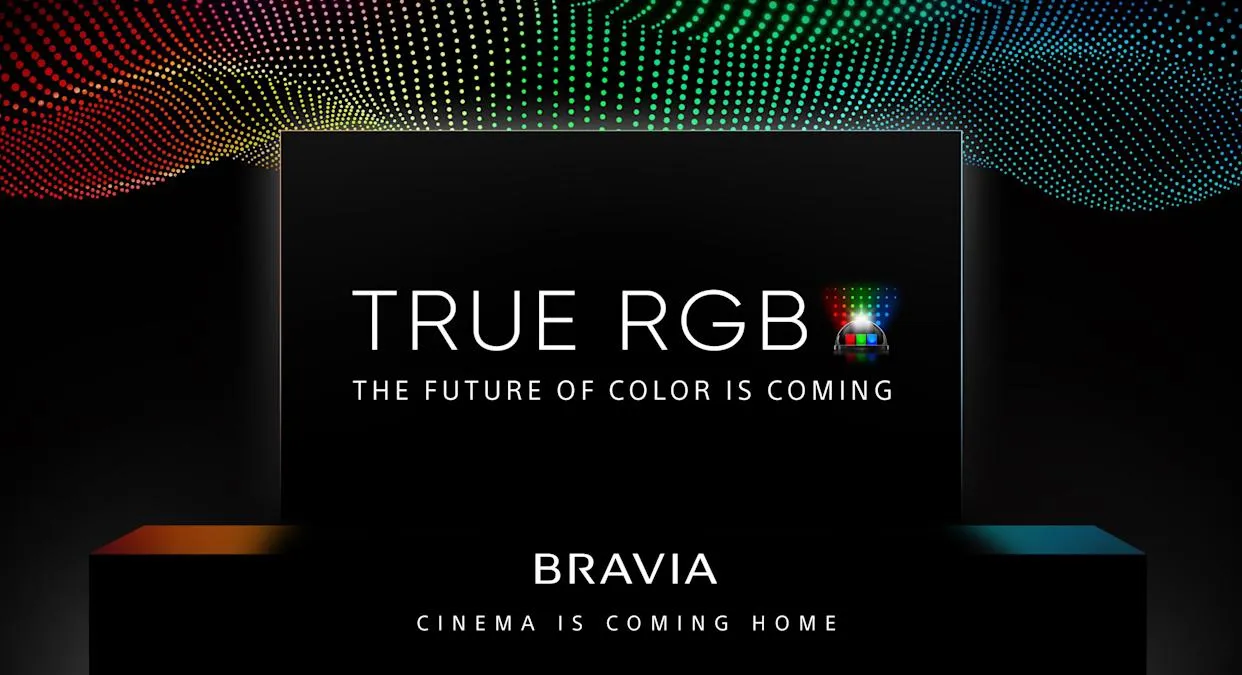
Sony's new True RGB Mini-LED technology is poised to make a significant impact on television displays, potentially challenging the prevailing dominance of OLED technology. The advancements were showcased at the recent Consumer Electronics Show (CES) and have generated considerable excitement among technology enthusiasts.
True RGB represents a notable evolution in Mini-LED design, featuring three distinct light-emitting diodes—red, green, and blue—per pixel. This innovative approach allows for improved colour precision and brightness output compared to conventional systems. Sony's intent in launching True RGB is to not only compete with OLED displays but to address some of the limitations associated with OLED, such as brightness and sizing flexibility.
In previous prototypes, the technology exhibited promising results. The early models, including a 22-bit Mini LED prototype and a proof-of-concept RGB Mini-LED backlight, hinted at potential but required further refinement for mainstream acceptance. However, advancements have now made True RGB viable for consumer televisions.
One standout feature of True RGB is its ability to produce peak brightness levels near 4,000 nits, significantly surpassing competitor models. This efficacy is achieved while ensuring that the energy consumption remains lower than that of rival RGB Mini-LED systems. Furthermore, True RGB offers enhanced off-angle viewing capabilities, allowing viewers to enjoy vibrant colours even when viewing from the side.
Through sophisticated processing capabilities, True RGB effectively controls each diode, ensuring better efficiency and less bloom, a phenomenon where light from one pixel leaks into neighbouring pixels. This level of control promises a viewing experience that aligns more closely with the creators' original intentions.
Although OLED technology has long set the standard for high-quality colour and brightness, the evolving landscape of Mini-LED technology—with Sony's True RGB at the forefront—suggests that the competition is becoming increasingly fierce. As confirmed by Sony, the goal of True RGB is not to eliminate OLED but to provide an alternative that avoids some of its drawbacks, particularly in terms of achieving higher brightness levels and larger screen sizes.
The anticipated launch of True RGB televisions is set for later this year, with Sony promising to unveil additional details in the near future. Given the company's storied history in the entertainment sector, including its involvement in cinema cameras and production quality, there is considerable optimism around this new offering. The next generation of televisions equipped with True RGB technology could change the landscape of home viewing, as it strives to combine the best aspects of existing technologies while pushing the boundaries of what is currently possible. With its capabilities firmly positioned to challenge OLED's reign, the future of television technology appears poised for exciting developments.

Kerala Initiates Probe into 2006 Suicide Case Involving CEC

Extradition of Sheikh Hasina Feasible, Says Indian High Commissioner

Punjabi Makeup Artist Mad Sandhu Shot Dead in Amritsar

India Achieves Fourth Place at Asian Games 2026 Through Late Success