Russia Declares Non-Negotiable Security Zone Inside Ukraine


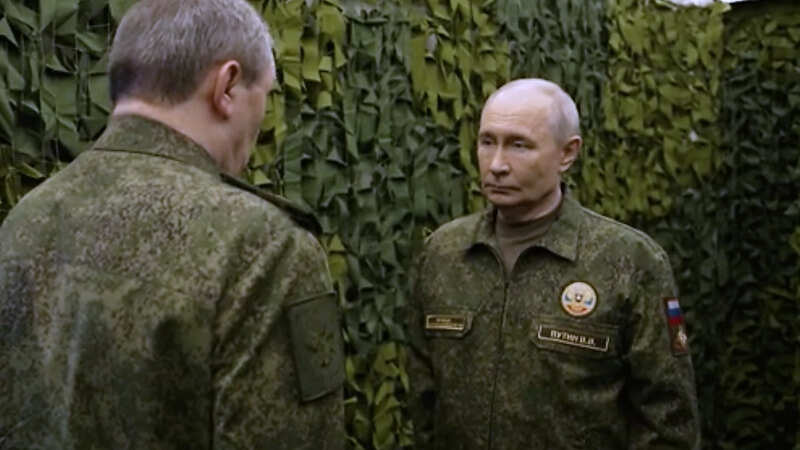
Russian President Vladimir Putin has declared the establishment of a "security zone" within Ukraine along the border. He specified that this area would not be open to negotiation in any potential future peace discussions with Ukraine. The announcement coincides with the ongoing conflict, now in its 1,697th day, as Russian forces react to Ukraine's recent military activities in Russia’s western Kursk region.
Putin, addressing troops at a command post dressed in military attire, stated that the operation aims to respond to what he described as an incursion by Ukrainian forces. "The Russian armed forces were tasked not only with expelling the enemy from our land but also with establishing a security zone in the adjacent territory. This task is being carried out successfully," he commented during a televised briefing on Friday.
According to Kremlin spokesperson Dmitry Peskov, the proposed security zone spans approximately 660 kilometres (410 miles), with around 70% of this area currently under Russian control. However, Peskov did not clarify how far this zone would extend into Ukrainian territory. The creation of this zone would entail seizing land in the Sumy and Kharkiv regions, which Russia has not yet claimed as its own.
In a related development, Ukrainian President Volodymyr Zelenskyy has noted that access to the Starlink satellite internet service for the Ukrainian military remains partially hindered. This issue has reportedly been linked to directives from within the White House, raising concerns about the implications for Ukraine’s operational capabilities.
During a recent meeting in Brussels, Zelenskyy urged European leaders to consider additional financial support for Ukraine’s military efforts, requesting €70 billion (approximately $79 billion or £59 billion) for the coming year. The talks were seen as crucial at this juncture, especially as Zelenskyy has been involved in ongoing disputes with US President Donald Trump over military strategies and policies.
On the ground, the situation in Ukraine remains dire. Latest reports indicate that Russian attacks on Friday resulted in at least eight fatalities and 60 injuries across various locations, including strikes on two shopping centres. Significant infrastructural damage ensued, leaving over 1 million people without electricity after assaults targeted energy facilities.
In the eastern city of Kharkiv, local governor Oleh Syniehubov reported two fatalities and multiple injuries due to strikes across three districts. Other regions like Kramatorsk and Dnipropetrovsk also experienced fatalities, with ongoing drone strikes inflicting further civilian casualties.
The humanitarian consequences of the conflict are becoming increasingly severe, as highlighted in a report from the United Nations human rights office in Kyiv. It noted a sharp rise in civilian casualties, with 328 deaths and 2,105 injuries recorded last month—a staggering 85% increase compared to September the previous year. Danielle Bell, head of the UN office, remarked, "The first two weeks of October were among the deadliest periods for civilians in years."
As missile and drone strikes continue to target key infrastructures in cities like Kyiv and Kharkiv, rolling blackouts and water shortages are becoming more frequent. Observers have likened these patterns to systematic efforts aimed at undermining the civilian population in major urban centres, as detailed in an analysis by Andrew Roth in the Guardian.

Delhi Police Detains Activist Abhijeet Dipke Amid Protests

Uttarakhand Minister's charges against husband
India's Jaishankar and US Senator Rubio Set for Mumbai Talks
Ladakh Announces Sankoo as Its Eighth District