Oil Prices Surge Amid US-Iran Tensions in Strait of Hormuz


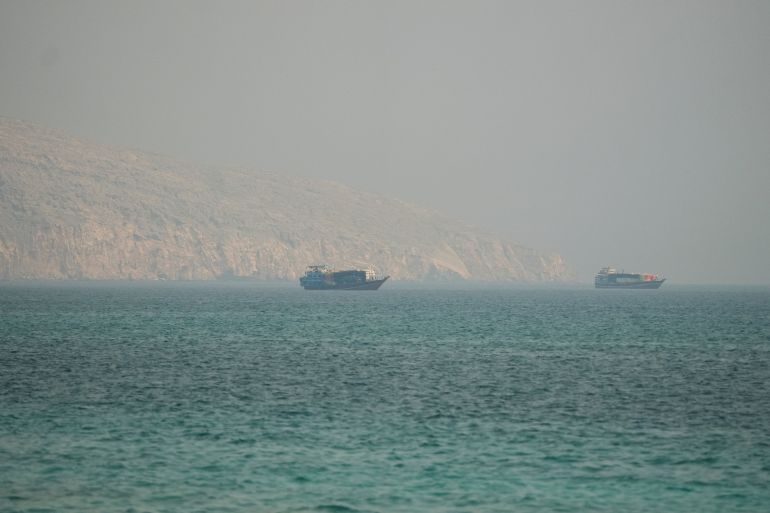
Oil prices have surged as tensions escalate between the United States and Iran over the vital Strait of Hormuz, a crucial maritime route for global oil transport. On Monday, Brent crude, the key international benchmark, recorded a rise of more than 4 percent, reaching $79.17 per barrel. This marks the highest price point since June 22. The surge in prices has been attributed to the increasing military confrontations following accusations by Washington against Iranian forces.
The U.S. Central Command, known as CENTCOM, reported conducting multiple airstrikes targeting Iranian positions to hinder their capacity to endanger shipping vessels in the strait. These strikes were reportedly initiated in response to an earlier attack on the MV GFS Galaxy, a Cyprus-flagged container ship, which was struck while navigating through the Strait of Hormuz.
A statement from CENTCOM highlighted the strategic importance of the Strait, asserting, "The Strait of Hormuz is a vital maritime corridor for global trade. Iran does not control it." The U.S. has reiterated its commitment to safeguarding freedom of navigation for commercial shipping in the face of what it describes as Iran's unwarranted aggression.
In retaliation, Iranian forces launched a series of missile and drone attacks targeting several Gulf nations, including the United Arab Emirates, Qatar, Kuwait, Oman, and Bahrain. The Iranian authorities have claimed the right to manage traffic through the Strait, warning that vessels not adhering to its preferred routes would not be granted safe passage.
These hostilities have had a noticeable impact on maritime traffic. According to data from Windward, a maritime intelligence platform, only six vessels transited the Strait of Hormuz between Thursday evening and Friday morning, a stark contrast to the daily average of 18 to 22 vessels earlier this month. The following Saturday and Sunday saw marginally greater movement, with nine vessels tracked, four of which were Iranian.
Before the conflict escalated, approximately 130 vessels passed through the Strait each day, a route responsible for transporting a fifth of the world’s oil trade under normal conditions. Following a memorandum of understanding aimed at de-escalating tensions that was signed last month, maritime traffic had seen a decline amidst the renewed conflict.
Analysts have shared their forecasts regarding oil prices amid the increasing geopolitical uncertainties. Mukesh Sahdev, founder and chief oil analyst at XAnalysts, anticipates that Brent prices will stay within the upper $70s for the months of August and September. He stated, “Long-haul procurement forces refiners to make supply decisions weeks in advance,” indicating that supply strategies are adjusting in response to the volatile situation.
Additionally, Fabien Yip, a market analyst at IG, expressed a more tempered outlook, suggesting that oil prices are unlikely to return to the peaks seen in earlier phases of the conflict. He noted, “Last week’s re-escalation exposes how fragile that assumption was,” referring to the return of oil prices to pre-war levels in June as markets had hoped for a stable US-Iran relationship.
In financial markets, Asian stock indices reacted negatively to the renewed fighting. The Nikkei 225 in Japan fell by over 1 percent, while South Korea's Kospi experienced a significant decline of more than 5 percent. In Hong Kong, the Hang Seng Index saw a modest dip of around 0.2 percent. As geopolitical tensions persist, analysts continue to monitor the situation closely, anticipating further fluctuations in oil prices and broader economic implications.

Kerala Initiates Probe into 2006 Suicide Case Involving CEC

Extradition of Sheikh Hasina Feasible, Says Indian High Commissioner

Punjabi Makeup Artist Mad Sandhu Shot Dead in Amritsar

India Achieves Fourth Place at Asian Games 2026 Through Late Success