Maruti Suzuki Sees Parallels Between EVs and Early Auto Industry


India's largest car manufacturer, Maruti Suzuki, has drawn comparisons between the current state of the electric vehicle (EV) market and the early days of the passenger car industry four decades ago. The company is poised to launch its first electric vehicle, the eVitara, in the Indian market next year, which is already being exported to international markets.
When Maruti Suzuki entered the Indian automotive landscape in the early 1980s, it encountered a lack of supply chains, limited service networks, and minimal consumer confidence. The company invested years in developing these essential components to establish a functioning market. Now, it believes that the transition to electric vehicles requires a similar foundational approach.
Partho Banerjee, Senior Executive Officer for Marketing and Sales at Maruti Suzuki, emphasised the importance of building trust with consumers. “At that time there was no industry. We created it,” he stated during a media roundtable. He acknowledged that several concerns still hinder the adoption of electric vehicles, including range anxiety, insufficient charging infrastructure, and the need for reliable after-sales service. “EV penetration is low because confidence is low. The ecosystem has to come first,” he added.
In response to these challenges, Maruti Suzuki is making significant investments to establish the necessary ecosystem. The company has set up 2,000 dedicated charging points throughout its sales and service network. Additionally, its nationwide workforce is undergoing retraining to support electric drivetrains and software-based diagnostics. Maruti is also preparing a service model that prioritises breakdown support over routine maintenance, which is less frequent for electric vehicles.
The company is offering several initiatives to encourage adoption, including an assured buyback programme, a Battery as a Service (BaaS) model, and subscription options for consumers.
Banerjee highlighted that the primary barrier to EV adoption lies in consumer psychology. Many households remain hesitant to consider electric vehicles as their main mode of transport due to persistent worries about charging availability. “Unless customers believe they can charge anywhere and that we stand behind the product, adoption won’t accelerate,” he remarked. “Confidence takes time.”
Price remains another obstacle, although the Indian government has introduced incentives to promote electric vehicles, such as a lower Goods and Services Tax (GST) rate of 5% for EVs compared to 40% for large internal combustion engine vehicles. Banerjee noted that it is now up to original equipment manufacturers (OEMs) to educate consumers and further develop the ecosystem.
Since batteries constitute approximately 40% of the total cost of electric vehicles, Banerjee believes that vehicle prices will decrease as battery manufacturing costs decline. He also observed a shift in market dynamics, explaining that the decision to launch an SUV as its first electric model was strategic. “We needed to increase our market share in SUVs, and that category is growing because of an unusually high number of launches there,” he explained.
Maruti Suzuki has already dispatched 10,000 units of the eVitara for export, while domestic sales are still being evaluated in light of changes to GST and new fuel-efficiency regulations. The company had previously projected annual car sales in India to reach between 5.5 million and 6 million by the fiscal year 2030, with 13% to 15% of those sales expected to be electric vehicles. However, Banerjee noted that these estimates will need to be reassessed next fiscal year due to recent developments.
Looking to the future, Maruti Suzuki plans to introduce five electric vehicles by the fiscal year 2030, including the eVitara. However, the company has refrained from providing specific forecasts for EV market penetration, citing the fluid nature of the current automotive landscape.
Kerala Initiates Probe into 2006 Suicide Case Involving CEC

Extradition of Sheikh Hasina Feasible, Says Indian High Commissioner
Punjabi Makeup Artist Mad Sandhu Shot Dead in Amritsar
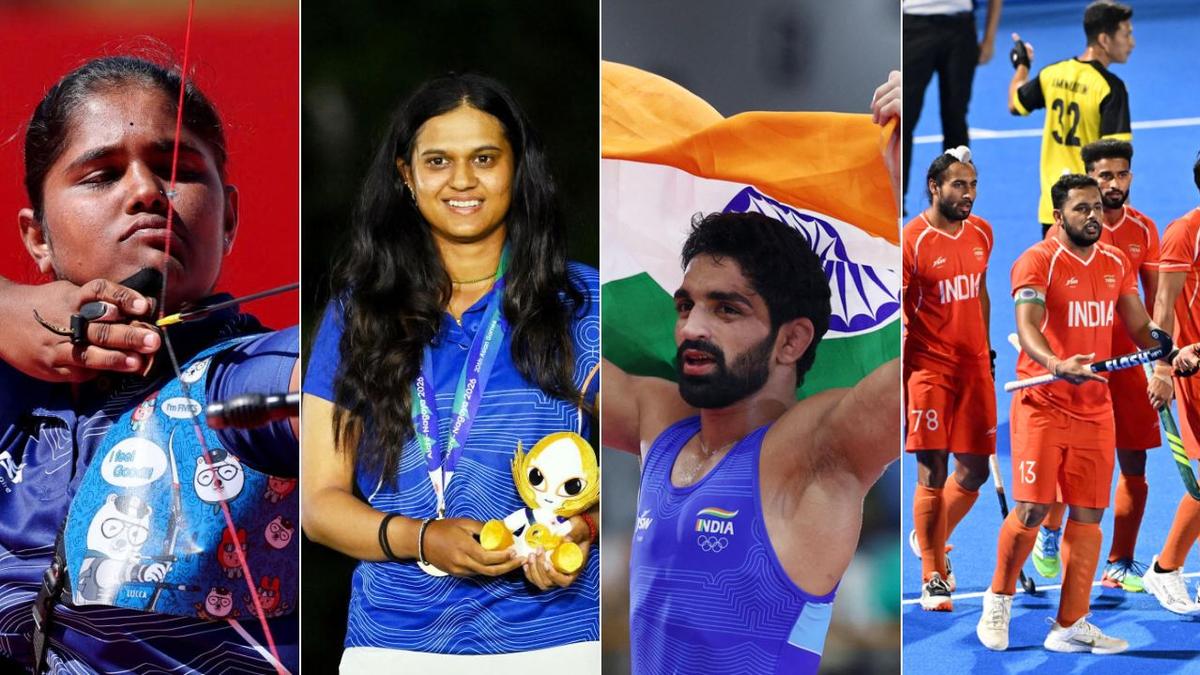
India Achieves Fourth Place at Asian Games 2026 Through Late Success