Limited Time for Quad Leaders Raises Concerns Over Commitment


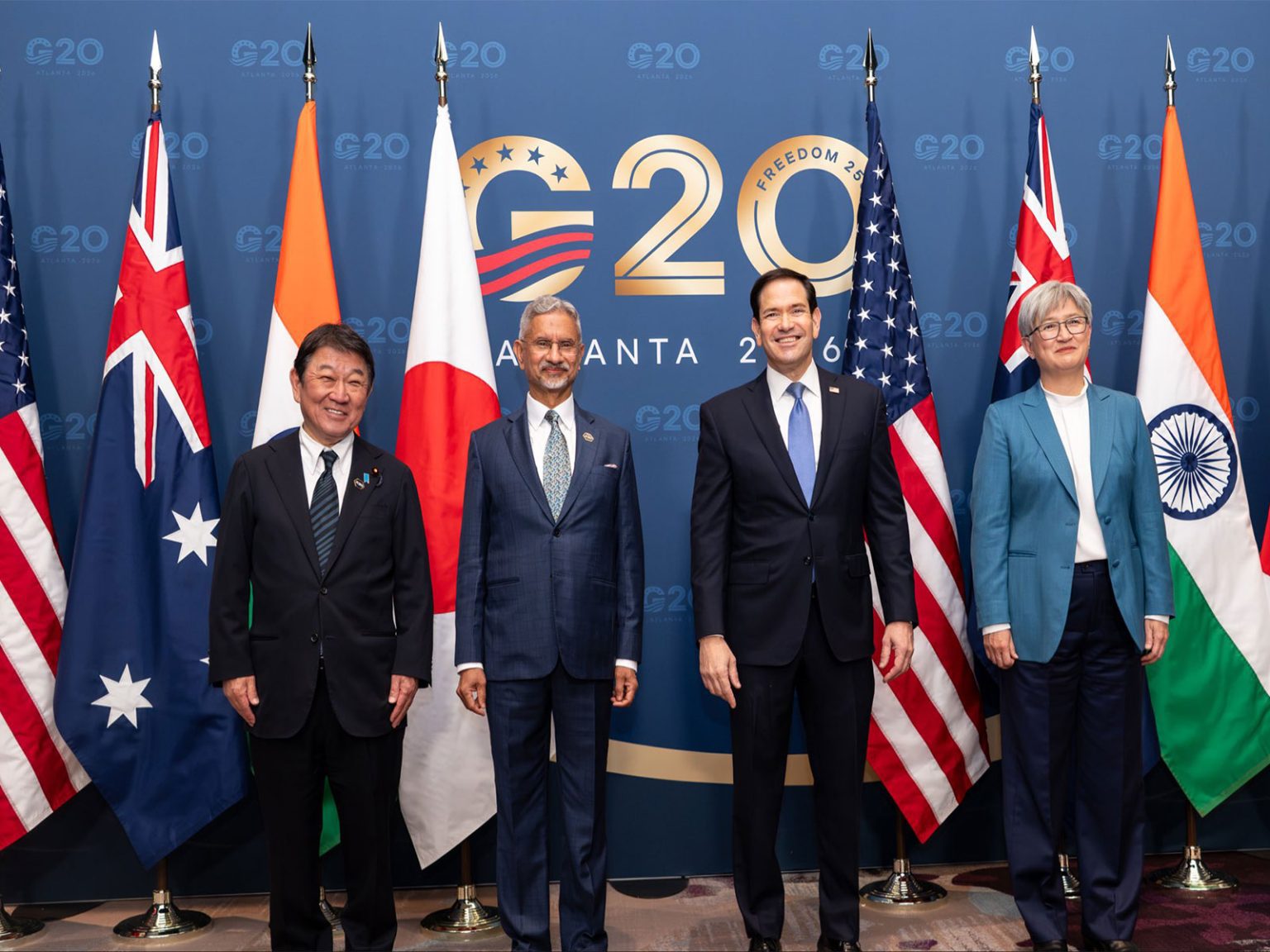
The recent gathering of the Quadrilateral Security Dialogue (Quad) leaders in Manila lasted only 55 minutes, drawing attention to the group's relevance as a counterweight to China's growing influence in the Indo-Pacific region. This meeting marked the first for the leaders of India, the United States, Japan, and Australia in two years, amid significant engagements between US President Donald Trump and other global leaders.
During the same timeframe, President Trump and Chinese President Xi Jinping are scheduled for a 105-minute discussion, followed by a trilateral meeting with Russian President Vladimir Putin. This staggering allocation of time raises critical questions regarding the prioritisation of the Quad in US foreign policy under Trump's administration.
Strategic affairs expert Brahma Chellaney pointed out that the decreasing duration of the Quad meetings reflects a loss of strategic relevance. The shift in the US's Indo-Pacific strategy towards a more accommodating approach to China further complicates the Quad's foundational purpose.
Former US ambassador to Russia, Michael McFaul, urged a recalibration of Washington's focus towards strengthening relationships with democratic partners, highlighting concerns that the current administration might lean too heavily on engaging with Beijing and Moscow.
Despite these challenges, the importance of time in diplomatic discussions cannot be understated. As political symbols, the allocation of time and attention often indicate the level of commitment to partnerships. The limited time frame for the Quad leaders could suggest dwindling political investment from the Trump administration, contrasting sharply with the high-level engagement seen under former President Joe Biden, who treated the Quad as a cornerstone of his Indo-Pacific strategy.
The Quad, first revived in 2017 amidst growing alarm over China's military assertiveness, was elevated to a leaders' platform during Biden's presidency. Efforts to progress cooperation on multiple fronts have continued, particularly in areas like energy supply chains, maritime security, and infrastructure. However, speculation remains regarding the ongoing political commitment from Washington.
This context is particularly relevant for India, which perceives the evolving dynamics in the Indo-Pacific as a direct national security concern. China's assertiveness along the Line of Actual Control (LAC) and its expanding activities in the Indian Ocean Region (IOR) make stability in the region a critical priority.
The Quad's meetings have sparked further scrutiny, with experts suggesting that the grouping's relevance may falter if not consistently championed by the US. As highlighted by Chellaney, the group's marginalisation in US strategic planning could undermine its influence and objectives.
In response to criticisms about the brevity of the meeting, White House spokesperson Olivia Wales defended the administration's commitment to the Quad, stating that the Trump administration has made significant advancements in promoting Quad cooperation.
Despite these reassurances, ambiguity remains regarding the urgency and intent behind recent Quad engagements, as the language employed by the White House draws attention. The official description of the Manila meeting as a 'multilateral meeting with Quad leaders' has led observers to question whether the gathering is being treated with the political significance it once held.
In conclusion, as the Quad seeks to navigate a changing geopolitical landscape, the impact of US foreign policy and its commitment to the partnership will be crucial for its future relevance and effectiveness in the Indo-Pacific region.

Quad Leaders' Summit: India looks at fresh dates later in 2024

3rd in-person Quad Leaders' Summit held in Hiroshima, Japan

Quad leaders' meeting to be held in Hiroshima, Japan on margins of G-7 Summit

At New Delhi meeting, Quad Foreign Ministers announce setting up of working group on counter-terrorism
