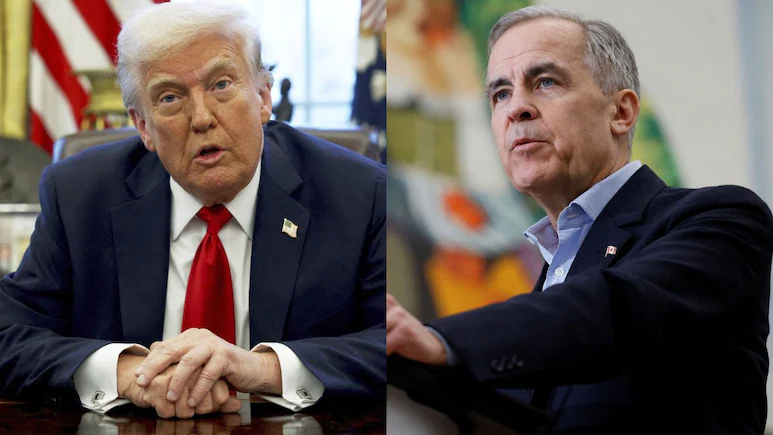
Iraq's Nouri Maliki Condemns Trump Over Election Interference


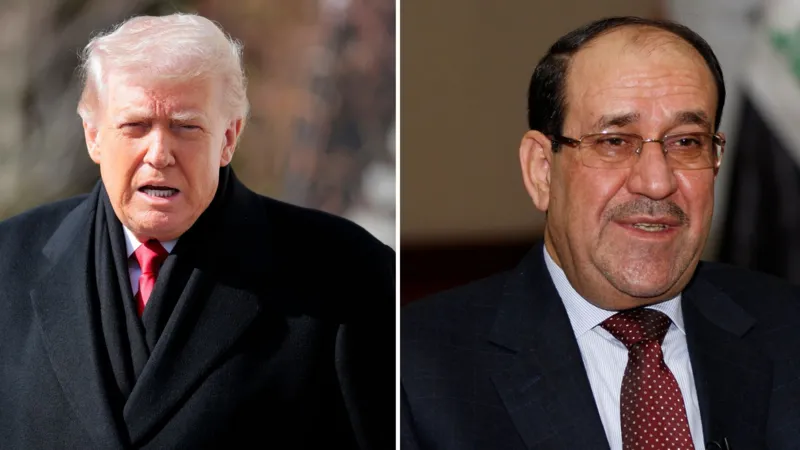
Nouri al-Maliki, the former Prime Minister of Iraq, has publicly condemned threats made by US President Donald Trump regarding US support for Iraq. Trump asserted in a recent post on his social media platform, Truth Social, that if Maliki returns to power, the United States would discontinue its assistance to Iraq. He described Maliki as a 'very bad choice' and expressed concerns about what he termed as the disarray during Maliki's previous tenure from 2006 to 2014.
Maliki, who has been linked to Iran, was named as the nominee for prime minister by a coalition of Shia parties over the weekend. In response to Trump's remarks, Maliki rejected any form of American interference in Iraq’s domestic affairs, labelling these comments a violation of the country's sovereignty. He stated, 'We reject the blatant American interference in Iraq’s internal affairs.' This declaration underscores the ongoing tensions between Iraq's leadership and external influences, particularly from the US.
During Maliki's previous administration, Iraq experienced significant sectarian violence that ultimately contributed to the rise of the Islamic State group, which took control of large areas of the country in 2014. This tumultuous period was marked by a collapse of Iraqi security forces and a subsequent loss of political backing for Maliki, resulting in his resignation.
Trump's comments came on the heels of various geopolitical tensions in the Middle East, as the United States seeks to counter Iran's influence in Iraq and the wider region. Congressional leaders in the US have expressed apprehension regarding Maliki's close ties with Tehran, fearing that a government under his leadership would not prioritise Iraqi interests over Iranian ones.
As the political landscape evolves, Iraq's parliament is preparing to elect a new president, a pivotal role that traditionally involves nominating the prime minister. However, this process has been stalled due to disagreements amongst the political factions. Maliki's faction, known as the Shia Co-ordination Framework, continues to support his bid for the premiership.
US Secretary of State Marco Rubio has recently conveyed similar concerns during discussions with Iraq's incumbent Prime Minister Mohammed Shia al-Sudani, emphasising that governance characterised by Iranian control would be detrimental to Iraq's future.
This situation highlights the complexities of Iraq's political climate, particularly regarding sectarian divisions and external pressures. The appointment of a prime minister is subject to the agreement of various political blocs, and the dynamics have been complicated by the historical legacy of Maliki’s governance and its fallout.
The ongoing discourse exemplifies the sensitive balance that Iraq must maintain between its relationships with Iran and the United States as it endeavours to establish a stable and sovereign political landscape moving forward.
Senior Chinese General Zhang Youxia Faces Corruption Investigation
Israel Confirms Retrieval of Remains of Final Gaza Hostage
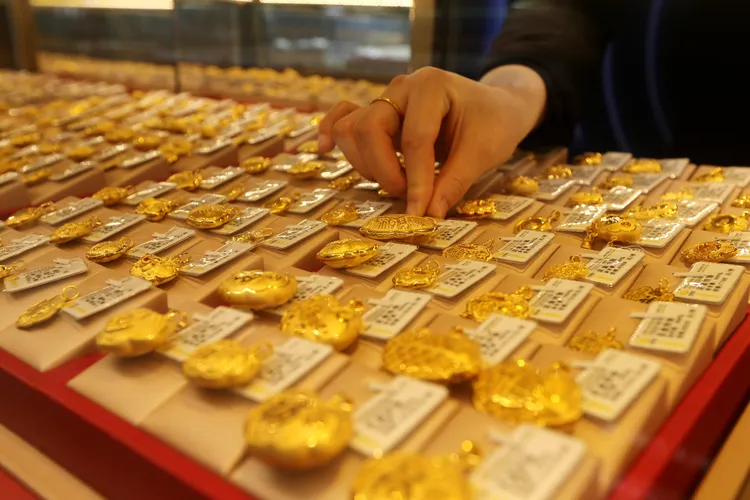
Gold Prices Surpass $5000 per Ounce Amid Market Uncertainty
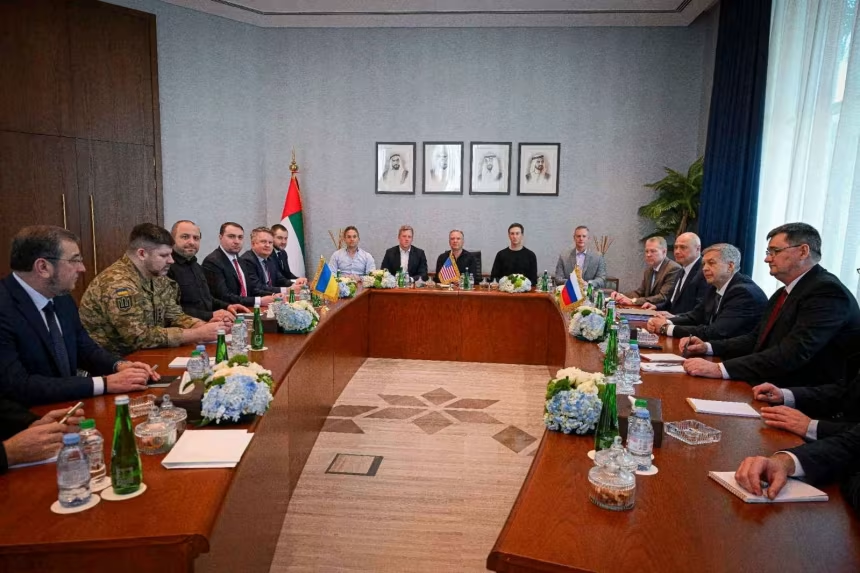
Casualties in Kyiv and Kharkiv Amid Ongoing Peace Talks