Iran and US Agree to Continue Negotiations Amid Ongoing Conflict


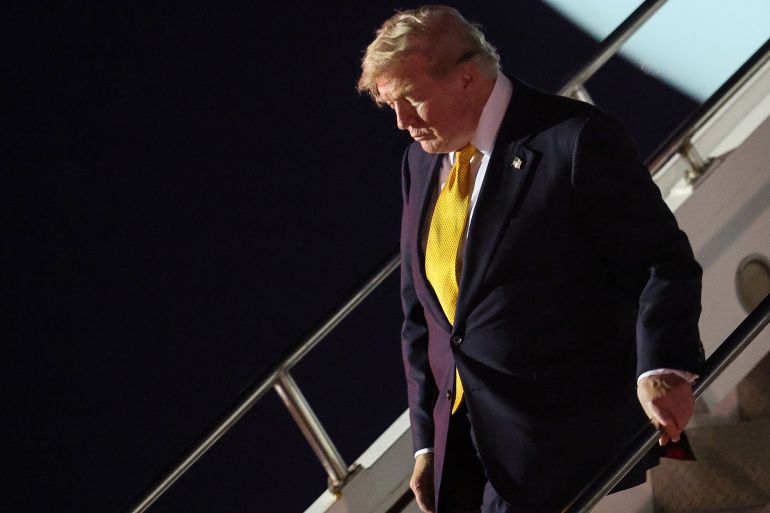
Tensions continue to rise between Iran and the United States amidst ongoing military conflict in the region. On Friday, United States President Donald Trump announced that Washington has agreed to Iran's request to resume negotiations, although he asserted that the ceasefire established on June 17 has effectively ended. In a post on his social media platform Truth Social, Trump stated, 'The Islamic Republic of Iran has asked us to continue talks. We have agreed to do so, but the United States has stated to them, in no uncertain terms, that the Cease Fire is OVER.'
Iran has not publicly acknowledged Trump's claim regarding the continuation of talks. The two nations have often provided conflicting narratives about their communications throughout the integrated US-Israeli conflict with Iran that began on February 28 this year.
Iran's Parliament Speaker and chief negotiator, Mohammad Ghalibaf, hinted at the country’s willingness to pursue diplomatic resolutions. He noted, 'At any moment the Americans betray the understanding, we are ready for full-scale defence and will stand firm against them and defend the rights of the Iranian people.' Ghalibaf expressed the belief that international efforts should focus on ending the conflict, but emphasised that Iran would not capitulate.
Recent weeks have seen a spike in military exchanges between the two sides, particularly over shipping activities in the vital Strait of Hormuz. Reports indicate that approximately 170 targets in Iran have been attacked by the US Central Command, following drone strikes by Iran against commercial vessels. This latest escalation poses significant challenges to the June 17 memorandum of understanding, which aimed to cease hostilities and facilitate commercial passage through the strait.
Trump's statements regarding the negotiations were vague, leaving questions about what the discussions would entail. The focus could either be on ending the ongoing fighting or addressing other complex issues linked to the earlier memorandum, such as Iran's nuclear programme and the potential unfreezing of Iranian assets.
Earlier this week, Trump clarified that the US does not aim to revert to full-scale war with Iran, despite ongoing threats to Iranian infrastructure and further military actions in the region. Meanwhile, Qatari officials are reportedly in discussions with Iranian leaders, aiming to de-escalate tensions and potentially facilitate broader negotiations that could take place in Qatar or Pakistan.
Qatar’s Prime Minister and Minister of Foreign Affairs, Sheikh Mohammed bin Abdulrahman bin Jassim Al Thani, publicly called for both the US and Iran to honour their commitments during a recent conversation with Egypt's foreign minister.
Both nations have accused each other of breaching the earlier bilateral agreement, which Iran interprets as allowing for influence over vessel passages in the Strait of Hormuz, while the US insists it requires safe navigational rights. The conflict remains a contentious issue, particularly as both governments face internal pressures.
Military analyst Alex Alfirraz Scheers stated that any forthcoming discussions between the parties are unlikely to yield significant results without a foundation of trust. 'Until there is genuine momentum for trust-building, these talks will probably lead nowhere,' he remarked.

Kerala Initiates Probe into 2006 Suicide Case Involving CEC

Extradition of Sheikh Hasina Feasible, Says Indian High Commissioner

Punjabi Makeup Artist Mad Sandhu Shot Dead in Amritsar

India Achieves Fourth Place at Asian Games 2026 Through Late Success