India Launches Rs 84,084 Crore Offshore Oil Exploration Initiative


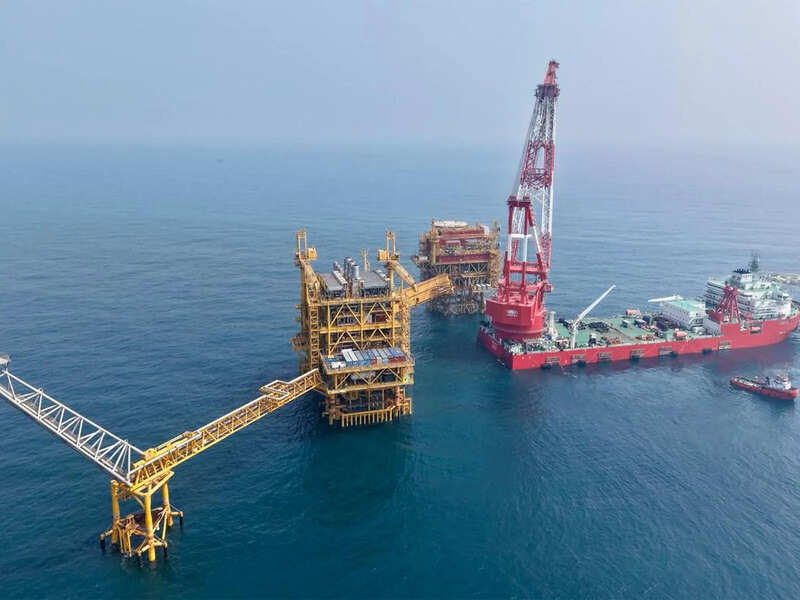
India has initiated a major offshore oil exploration programme, potentially the first of its kind globally, as the government seeks to lessen its reliance on imported crude oil and natural gas. The Union Cabinet recently sanctioned the Rs 84,084 crore Samudra Manthan National Offshore Exploration Scheme. This scheme will finance half of the expenses for drilling costly deep-sea and ultra-deep-water wells, providing up to Rs 650 crore for each well directly from the national budget.
This approach marks a significant shift, with officials indicating that previous methods usually relied on the private sector to bear the financial risks of exploration. By underwriting exploration costs, the government aims to stimulate interest in India's largely untapped offshore reserves. Over the next five years, the goal is to support the drilling of 60 deepwater wells.
Beyond merely funding well drilling, the initiative will also finance critical infrastructure components, including subsea pipelines and processing facilities onshore. This shared resource strategy allows multiple operators to benefit from pooled infrastructure, potentially enhancing the economic viability of discoveries.
Historically, private companies have been hesitant to invest in high-risk exploration due to the potential of financial losses if no viable hydrocarbons are discovered. This has led to a focus primarily on development drilling, where existing oil fields are exploited. According to officials, the Samudra Manthan initiative is a 'game-changing scheme' aimed at changing this trend.
Eligible participants will include companies awarded blocks under previous Open Acreage Licensing Programme rounds and those securing new blocks in ongoing bidding processes. The scheme is intended to attract global energy firms to invest in India's offshore sectors, thereby enhancing local production capacity.
Industry experts underscore the importance of offshore seismic data acquisition, which has thus far been a barrier in regions previously classified as 'No-Go zones.' Prashant Vashisht, Senior Vice President at ICRA Ltd, highlighted that the initiative provides essential funding to bridge the gap in technical expertise and resources that has limited domestic exploration efforts.
While the programme is significant, analysts noted that its impact on import dependence may be limited, aiming for a decrease in reliance on foreign oil and gas supplies by approximately 3-5%. India has experienced an uptick in its dependence on imported crude oil, rising from 77% to 88% over the last decade. The ongoing global tensions, particularly in West Asia, have further emphasised the necessity for India to bolster its domestic energy production capabilities.
To illustrate the distribution of financial resources within the scheme, Rs 43,200 crore is earmarked solely for deep-sea drilling, with over half of the total budget focused on this high-risk venture. Other allocations include Rs 10,000 crore for shared infrastructure development and Rs 28,534 crore for offshore data acquisition essential for identifying potential drilling sites.
The project also introduces a Common Hub Infrastructure (CHI) component. This model encourages multiple operators to collaborate, decreasing individual project costs and increasing overall efficiency in hydrocarbon extraction and transport. The initiative represents a commitment to enhancing project economics while optimising resources in challenging deep-sea environments.
Despite the optimism surrounding the scheme, experts emphasise that offshore exploration is inherently risky and returns may not be immediate. Policymakers are adopting a long-term perspective, viewing this as a necessary step to ensure energy security and mitigate the risks associated with global energy market fluctuations. India's evolving oil and gas exploration policy, including the Hydrocarbon Exploration and Licensing Policy (HELP), is reflected in this latest initiative, aiming to adapt to changing market demands and trends.
US House Advances Bill Allowing Tariffs on Nations Buying Russian Oil
Meta to Report Child Sexual Abuse Material to Indian Authorities
India Clarifies Bangladesh PM's BRICS Invitation Amid Confusion
Odisha Government Denies Premature Release of Dara Singh