Indian Scholars Condemn Protests Against Election Commission


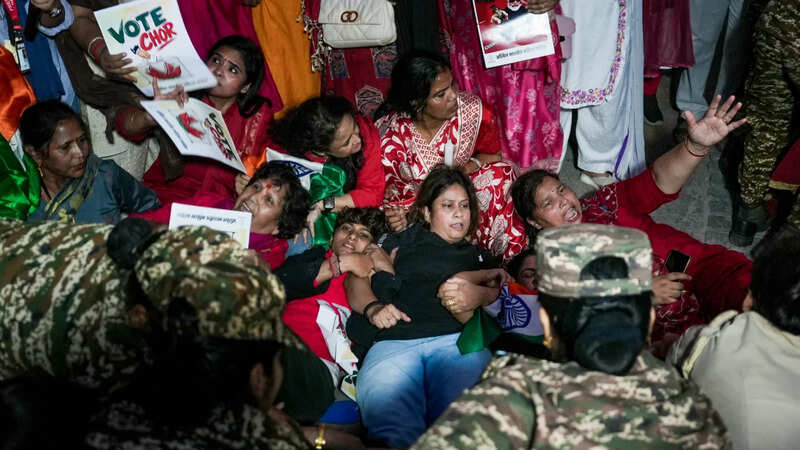
More than 400 Indian-origin students, researchers, and alumni from institutions spanning 27 countries have publicly condemned the recent protests against the Election Commission of India. In a joint statement titled "Spare India from Anarchy," the signatories expressed concern regarding the undermining of public confidence in constitutional institutions, asserting that the demonstrations threaten to delegitimise the democratic process.
The statement criticises what the signatories termed "anarchic street protests" which they believe challenge democratic legitimacy. They caution against actions that may erode constitutional democracy while masquerading as efforts to protect it. This declaration comes amidst heightened scrutiny of the Election Commission, with various opposition parties casting doubt on the electoral integrity and alleging electoral irregularities.
The signatories assert, "An unconscionable and devious plan of sowing seeds of doubt in Indian democracy has been hatched by weaponising sub judice matters, amplified on the streets by anarchist forces historically opposed to constitutional governance. All in the name of saving democracy."
They express disbelief at the contradictions inherent in the situation, stating, "As informed individuals concerned about the future of our country, we are deeply anguished by this state of affairs."
The statement highlights the resilience of Indian democracy, noting that constitutional institutions have thrived under a system of checks and balances since India achieved independence over 70 years ago. The signatories stress that peaceful transitions of power have remained a testament to the system's strength.
However, they lament a prevailing atmosphere of election denial and scepticism directed at constitutional bodies, particularly in certain political factions. The statement mentions that adverse election results have prompted questions regarding procedural integrity, and troubling remarks about the independence of the judiciary have emerged from influential quarters.
Furthermore, the statement expresses concern over the entanglement of the Armed Forces, regarded as an apolitical entity, in partisan debates, which they argue is unjust and unnecessary. They invoke the words of Dr Bhimrao Ramji Ambedkar, the chief architect of the Indian Constitution, who warned against abandoning constitutional methods in favour of chaos.
The signatories further clarify that solidarity with democratic movements globally should not come at the cost of endorsing regressive methods for achieving narrow political goals. While recognising that dissent is vital for a healthy democracy, they emphasise the importance of upholding democratic structures rather than watching them be undermined.
They urge for resolution of differences through constructive means such as dialogue, discussion, and lawful dissent, all conducted within constitutional frameworks. Many signatories are affiliated with prestigious universities, including the Massachusetts Institute of Technology, Stanford University, and the universities of Oxford and Cambridge, among others. The statement clarified that institutional affiliations do not imply endorsement of the joint statement by these institutions.
Amit Shah's Visit to Punjab Aims to Address Drug Issues

JNU Students' Hunger Strike Reaches 17-Day Mark Amid Rising Tensions

UAE Deputy Prime Minister Sheikh Abdullah Al Nahyan Commences Mumbai Visit

Rahul Gandhi Departs for Hanoi Amid Political Tensions in India